Event 1
Tadamasa Goto’s 2001 liver transplant
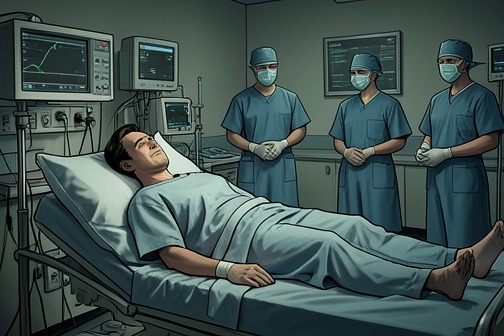
[Tadamasa Goto’s 2001 liver transplant](entity:event-recall-event-tadamasa-goto-s-2001-li-92504e354f8a) at [UCLA](entity:organization-recall-organization-4644be555b87) was both a medical intervention and the hidden hinge of an international arrangement: the FBI helped secure his entry to the [United States](entity:location-recall-location-united-states-2f533bc8d0b9) in exchange for intelligence, while the transplant’s financing and the institutions’ knowledge of his criminal ties remained contested. The operation transformed a puzzling journey by a blacklisted crime figure into a story about law enforcement, scarce organs, and the limits of what investigators could establish.
## Medical urgency and the journey to UCLA
In January or February 2001, doctors at Showa University told Goto that he would die without a liver transplant soon. He had hepatitis C and a heart condition, and was considered a very unlikely transplant candidate in [Japan](entity:location-recall-location-japan-2b426de89e42). In the summer of 2001, he received the transplant at the [Dumont-UCLA Liver Cancer Center](entity:location-recall-location-dumont-ucla-24d38e32cd42); the operation took place on July 5.
For months, [Jake Adelstein](entity:character-recall-character-jake-adelstein-a6696f64c12c) had been investigating how Goto reached the United States. At first, he knew that Goto had undergone surgery at UCLA, had heard who the surgeon might be, and had conflicting estimates of the cost. He also knew that some hospital expenses had reportedly been sent from Japan through the [Tokyo](entity:location-recall-location-tokyo-0b4edfa3fe2f) branch of a [Las Vegas](entity:location-recall-location-las-vegas-96bec1c037c8) casino. Yet Goto was on the watch lists of U.S. Customs and Immigration, the FBI, and the DEA. His arrival appeared difficult to reconcile with his blacklisted status, and Adelstein suspected that the journey concealed a larger story.
## The intelligence bargain
The explanation emerged in November 2006, when a Goto associate told Adelstein that the FBI had let Goto into the United States. Further reporting, drawing on sources in the U.S. Justice Department, Japanese police, and the underworld, reconstructed the arrangement. In April 2001, Goto approached the FBI through Hoshi Hitoshi, a former political fixer with deep connections to the Liberal Democratic Party.
The FBI wanted information about prominent yakuza because Japan’s [National Police Agency](entity:organization-recall-organization-f33ab0afb849) had declined to share such information, citing privacy concerns. Goto offered a comprehensive list of [Yamaguchi-gumi](entity:organization-recall-organization-yamaguchi-gumi-6dea21d63647) members, related front companies and financial institutions, as well as information about North Korean activities. In return, he wanted a U.S. visa so he could receive a transplant at UCLA. Goto arranged the UCLA treatment himself; the FBI’s role, as Adelstein reconstructed it, was to press U.S. Immigration and Customs to grant a visa, which the agency did reluctantly.
The bargain did not deliver what Goto had promised. After the operation, he returned to Japan and never spoke to the FBI again, having supplied only a fraction of the information. Adelstein’s account says there were no records of Goto returning to Japan. The transplant thus became inseparable from an intelligence exchange that opened the door to treatment but apparently yielded far less intelligence than the FBI had sought.
## Payments and unanswered questions
The reported price varied sharply. Goto told an associate that he had paid $3 million for the liver; police reports put the figure at $1 million and speculated that his doctor had received $100,000 for each visit to Japan, usually at the Imperial Hotel. These were reported figures and allegations, not a settled accounting of the transplant’s costs.
The case also drew attention to the unequal pressures surrounding organ access. Japan had a stringent transplant system, with few donors and relatively rare operations; people needing organs often had to leave the country or die waiting. Against that scarcity, the treatment of Japanese patients with yakuza ties prompted questions about whether foreign patients with criminal records received access at the expense of law-abiding Americans. The evidence establishes the controversy, not that those patients were given priority over particular American candidates.
Adelstein also reported federal law-enforcement sources’ concern that payments to UCLA might have included proceeds from criminal activity in Japan. Such a transfer could constitute international money laundering, but the possibility was not established: to his knowledge, none of the four Japanese patients with yakuza ties treated at UCLA had been investigated for money laundering. Any such investigation would have required cooperation from Japanese authorities. Whether UCLA knew of the patients’ ties or the possible origins of payments remained unresolved.
## Institutional findings and narrative consequence
It was never proven that UCLA or [Dr. Busuttil](entity:character-recall-character-dr-busuttil-a0f6d69be514) knew, when the transplants were performed, that any of the patients had ties to the Japanese mafia. Both said that they treated patients according to medical need and did not make moral judgments about them; neither explicitly addressed what they knew about the four patients’ alleged ties. An investigation conducted by UCLA and the U.S. Centers for Medicare and Medicaid Services found no evidence of improper conduct, according to the [Los Angeles Times](entity:organization-recall-organization-a9925259ee55). That finding did not settle the broader ethical questions about organ allocation, transparency, or the source of funds.
The transplant mattered to Adelstein’s reporting not simply because Goto had received treatment abroad, but because the apparent impossibility of his entry led toward the FBI deal. Goto was sufficiently concerned about disclosure that the investigation placed Adelstein in danger; his colleague [Sekiguchi](entity:character-recall-character-sekiguchi-1f2cb88ba474) urged him to retreat without abandoning the story. The later account therefore holds together two kinds of uncertainty: a documented visa arrangement reconstructed from sources, and unresolved questions about what UCLA knew, how payments were made, and whether any money was illicit. The operation’s significance lies in that boundary between what the investigation could reveal and what it could not prove.
Event 2
1995 Tokyo subway sarin attack

The [1995 Tokyo subway sarin attack](entity:event-recall-event-1995-tokyo-subway-sarin-a8567be419fb) enters the narrative as a later event that changed security across [Tokyo](entity:location-recall-location-tokyo-0b4edfa3fe2f). Its significance here is the contrast between the relatively open access [Jake Adelstein](entity:character-recall-character-jake-adelstein-a6696f64c12c) encountered at the [Tokyo Metropolitan Police Department](entity:organization-recall-organization-5932fff45c51) and the stricter procedures that followed the attack.
## Chronology and Context
During Adelstein’s visit, a police escort was technically required for visitors who were not registered members of the press club, police employees, or people with security clearance. An exception was made for [Ansei Inoue](entity:character-recall-character-ca0424b798d0), who came and went as he pleased. The account places the attack three years after this visit, marking the earlier access arrangements as a pre-attack condition.
## Security Consequences
The attack had the effect of tightening security procedures across the city. The account does not specify the measures introduced; it identifies the attack as the turning point after which the earlier, looser conditions no longer applied.
## Narrative Significance
Rather than recounting the attack itself, the narrative invokes it to explain a change in the institutional atmosphere surrounding access to the police. The brief reference makes a later event a dividing line: ordinary movement through the Tokyo Metropolitan Police Department had been possible for some visitors before the attack, while security tightened afterward.
Event 3
The Chichibu Snack-mama murder case

[The Chichibu Snack-mama murder case](entity:event-recall-event-the-chichibu-snack-mama-49701c95bb1a) is the account of a homicide investigation that carried [Jake Adelstein](entity:character-recall-character-jake-adelstein-a6696f64c12c) from an unexpected late-night assignment to a police scoop published before an arrest. The victim’s locked, orderly apartment offered no obvious sign of burglary, and early suspicion centered on her daughter’s Iranian boyfriend. Forensic evidence eventually identified him as the suspected killer; police attributed the crime to his opposition from the victim to his marriage to her daughter, while the daughter’s possible role remained uncertain.
## Assignment and Discovery
The assignment arrived at about nine in the evening, on what was Jake Adelstein’s first day off in three weeks. A call from [Yamamoto](entity:character-recall-character-yamamoto-a83bb41da631) interrupted the rare break: there was a probable murder in [Chichibu](entity:location-recall-location-6121eb699383), and Adelstein was needed at the scene immediately. He hurried by bicycle to the office, took the driver’s seat beside Yamamoto, and set out for the town. The call also effectively ended Adelstein’s budding relationship with his first serious Japanese girlfriend, a personal cost that the urgent demands of police reporting made difficult to separate from the work.
Yamamoto explained that the victim ran a snack bar and had been found at 7:45 that evening in her bedroom in a prefectural public-housing development. She had failed to appear for work, prompting an employee to visit her apartment and call emergency services. Yamamoto went to the police station for the briefing; Adelstein was left at the scene to find a photograph of the victim and someone willing to speak well of her. The newspaper was reluctant to send him to police briefings, fearing that he would miss important details, so his work depended on gathering information from the scene and from police contacts.
The victim had run the bar for close to fifteen years and normally started work at five in the afternoon. When she did not arrive, a hostess first knocked at her locked door, then asked the building manager to open it with a key. The apartment appeared orderly, with no apparent burglary or struggle and nothing obviously missing. The victim was found on her futon. A preliminary autopsy placed the killing between midnight and early morning and indicated a single fatal blow from a rodlike object, possibly a baseball bat.
The known timeline sharpened suspicion without resolving it. An employee had last seen the victim alive at about one in the morning, after dropping her off from work. A high-school friend called at ten the next morning and received no answer. The victim’s twenty-eight-year-old daughter had been seen leaving the home with a man at about 2:30 a.m. Police declared the death a murder and established a special investigation headquarters, informally naming the inquiry the Chichibu Snack-mama Murder Case.
## Suspicion and Investigation
The daughter’s boyfriend quickly became the central suspect. He was Iranian, and [Kanji Yokozawa](entity:character-recall-character-9673ba399e84) told Adelstein that the efficient manner of the killing suggested someone who knew how to kill. Yokozawa also invoked a generalization about Iranian men in [Japan](entity:location-recall-location-japan-2b426de89e42), some of whom had been soldiers and fought in the [Iran–Iraq War](entity:time-recall-time-0436732ccfd8). That characterization informed police suspicion, but it was not itself evidence that this particular man had committed the crime. The boyfriend could not be found, while the daughter was in shock and questioning her was not going well. Yamamoto reported that police were unsure whether she had encouraged the killing or whether the boyfriend had acted alone.
The apartment’s locked door posed a practical question. Yokozawa reasoned that whoever locked it after the killing probably already had a key: the victim was unlikely to have left the door open or to have welcomed a visitor while still in her pajamas. A stranger could theoretically have taken her key and used it to delay discovery, he allowed, but considered that explanation unlikely. This reasoning made the eventual recovery of a key especially consequential.
By the next morning, forensic findings had given the police a basis to seek an arrest warrant. The reported evidence included a bloodstained sweatshirt, a pair of pants with the apartment key in a pocket, and a bloodstained metal tool found near the crime scene. Yamamoto and [Ono](entity:character-recall-character-843d588f1e0d) hurried to place the story in the evening edition before police made their public announcement. The headline said that Saitama police were preparing to arrest the Iranian boyfriend of the victim’s eldest daughter. Police arrested him within the day.
## The Arrest and Its Limits
The forensic chief told Adelstein that the boyfriend had killed the victim because she did not want him to marry her daughter. The suspect denied guilt and maintained that police had framed him. The account therefore distinguishes between the police conclusion and the suspect’s denial: the recovered objects and the arrest supported the investigation’s identification of him, while the denial remained part of the immediate record.
The daughter’s possible involvement was never resolved in the material surrounding the initial investigation. Before the arrest, police had wondered whether she had put her boyfriend up to the killing, but her shock made questioning difficult. The case’s quick movement toward an arrest did not establish that suspicion as fact. In Adelstein’s view at the time, the case was finished; he did not think about it again until nearly a year later.
## The Scoop and the Press System
The article was a scoop in the particular sense prized within the police press club: it appeared before the police announced the arrest. It was not the result of a prolonged independent investigation. Adelstein had relayed his conversations and observations to Yamamoto, who understood their possible significance and passed the information onward. The story’s timing depended on access to police information and on the working relationships that linked reporters to officers.
That access came with an imbalance. The police could shape what reporters learned, while reporters accepted that closeness because it offered the possibility of getting a story first. In this case, the arrangement produced a clean advance report, and the [Asahi Shimbun](entity:organization-recall-organization-42b6c2d9ab5e), the newspaper’s natural rival, had to follow later. Adelstein received congratulations from Yokozawa, but remained unsure what he had done to earn the scoop. The episode makes the result visible while also showing how little of the information chain was under the reporter’s control.
## Significance in the Narrative
The case joins a sudden interruption in Adelstein’s private life to the practical routines of crime reporting: a rushed departure, a scene assignment, a police briefing he was not expected to attend, and information passed through contacts until it could support a publishable claim. Its details also show how an investigative judgment can combine physical evidence with assumptions about a suspect’s identity. The boyfriend’s nationality became part of the early police framing, but the evidence that drove the reported arrest was more concrete: clothing, a tool, and the key to the victim’s apartment.
The case’s ending is consequently twofold. For the newsroom, the arrest and advance article made the assignment a success. For Adelstein, it seemed over, even though the suspect rejected the police account and the daughter’s possible role had remained an open question. That gap between a story’s apparent closure and the limits of what its reporting has established gives the episode its place in the book’s portrait of police journalism.
Event 4
Japan’s 1992 anti-yakuza legislation
[Japan’s 1992 anti-yakuza legislation](entity:event-recall-event-japan-s-1992-anti-yakuz-2605e86c680a) marked a forceful official response to organized crime, yet its limits left the yakuza able to adapt and endure. Introduced after the excesses of the 1980s, when groups moved heavily into real estate and other legitimate businesses, the law was described as the toughest antimob measure in a generation. But it did not make membership in a criminal organization illegal, and police still lacked wiretapping, plea bargaining, and witness protection—tools long considered crucial in other countries.
## Background and Limits
The legislation promised a break with the state’s longstanding, ambiguous relationship to the yakuza, but the legal framework stopped short of treating membership itself as a crime. Nor did it supply investigators with several powers that could help uncover organized crime and secure testimony. The book stresses the consequence of that gap: nearly seventeen years after the first laws targeting the yakuza went on the books, the groups remained powerful, and the prospect of giving police those more radical tools appeared remote.
## Commercial Forms and Persistence
The limits of the 1992 legislation mattered in an economy where organized crime could operate through more than its members’ direct actions. The book describes yakuza groups as legally recognized entities, with members holding the same rights as ordinary citizens. Their business reach included real estate, finance, and other ostensibly legitimate activity, making a law that targeted organized crime without outlawing membership a partial response to organizations embedded in ordinary commercial life.
The [Sumiyoshi-kai](entity:organization-recall-organization-sumiyoshi-kai-c4f533e84f08)’s practices show how that reach worked. It profited from land speculation and jiage, or land-sharking: using pressure to remove tenants so properties could be sold at higher prices. It also obstructed public auctions of seized property, sometimes helping an original owner buy it back cheaply and sometimes acquiring it through a front company. Other income came from illegal waste disposal, protection payments from the sex industry in Omiya, and an array of fronts, including staffing agencies, loan operations, an insurance company used for false claims, a debt-collection agency, pawnshops, retail businesses, and event services. Its political front collected money through expensive newsletter subscriptions, disguising payments as subscriptions rather than overt extortion.
[Susumu Kajiyama](entity:character-recall-character-susumu-kajiyama-1c7708402587)’s network offered another example of organized crime structured as a franchise rather than a single loan-sharking operation. Its businesses included real estate and construction, and many carried the initials SK: SK Finance, for instance, was licensed as a consumer-loan business in [Shinjuku](entity:location-recall-location-shinjuku-17bbde8f9594) and also dealt in real estate. Loan shops’ employees were directed to buy lunch from an affiliated food company, while managers’ spending at connected businesses and designated resorts circulated money through the wider network. These arrangements show why formal measures against the yakuza could coexist with criminal enterprises threaded through licensed businesses, employment, property, and everyday transactions.
## Enforcement Gaps and Human Trafficking
The limits of [Japan](entity:location-recall-location-japan-2b426de89e42)’s organized-crime laws formed part of a wider enforcement problem: foreign women exploited in the sex trade could be treated as immigration violators before they were protected as victims. [Helena](entity:character-recall-character-helena-122119b0baeb), herself working by choice, reported that women recruited overseas were promised good earnings but arrived to find themselves dependent on club operators, burdened by unexpected costs, and forced to work to meet them. She identified Slick and Viktor as operators supplying women to clubs in [Tokyo](entity:location-recall-location-tokyo-0b4edfa3fe2f) Roppongi and Shibuya. Veronika’s account made the recruitment process concrete: an advertisement promised hostess work, a recruiter described dancing and conversation, and after her arrival in Tokyo she was taken to the Den of Delicious and told she would provide sexual services. Her passport and travel documents were no longer available when she tried to leave.
The police response could deter the very testimony needed to investigate the operators. When asked whether a woman would be protected if she came forward, an officer said she would instead be arrested for working illegally on a tourist visa and deported; her testimony might help establish immigration violations against the men and close their business. The stated legal obligation thus placed the potential witness at risk of punishment and removal. More broadly, women were often deported after club owners were arrested, while language barriers and limited information about their captors made it difficult to build cases for kidnapping, rape, or assault. Their removal could leave investigators without evidence for those charges, creating a cycle in which the law’s treatment of victims weakened the prosecution of traffickers.
The book presents a separate route toward accountability through public exposure. A United Nations-backed [International Labour Organization](entity:organization-recall-organization-06dd7b2628ac) study, funded by the Japanese government, concluded that Japan had failed to punish traffickers or care for victims. The government ordered the report kept from publication, but a reporter obtained a copy and secured front-page coverage in the Yomiuri on [November 19, 2004](entity:time-recall-time-2004-11-19-a37a3ac407a2), followed by another article the next day. A source said the resulting scrutiny prompted substantial revisions to a planned government response, strengthening victim protections. Slick’s clubs were later raided and he went out of business; information supplied to Japanese Customs and Dutch police contributed to Viktor’s imprisonment. These outcomes show both the possibility of intervention and its dependence on investigative testimony, cross-border information, and pressure on institutions that had not reliably protected victims.
## The Legal Contradiction in Practice
The law’s limits sat within a longer political and social ambiguity. Experts cited in the book traced murky historical links between the yakuza and the Liberal Democratic Party, which they said had been founded with yakuza money; an older reputation for settling disputes among themselves and sparing other gang members’ families had also helped sustain their image as a “necessary evil” and a kind of second police force. Their legal position made that ambiguity concrete: the [Yamaguchi-gumi](entity:organization-recall-organization-yamaguchi-gumi-6dea21d63647) maintained a high-walled compound in an affluent part of [Kobe](entity:location-recall-location-kobe-16e0a0c542b5), and its status as a recognized legal entity made it difficult to dislodge even when occupying property as a tenant. In [Nagoya](entity:location-recall-location-b7487b44bf2b), where the group’s Kodo-kai faction had roughly four thousand members, lawyers advised businesses and landlords to use organized-crime exclusion clauses and issued a manual on dealing with front companies. The legislation therefore confronted organizations that remained both targets of antimob policy and participants in a legal and commercial order that gave them room to persist.
Event 5
The Suruga Corporation yakuza payments scandal
[The Suruga Corporation yakuza payments scandal](entity:event-recall-event-the-suruga-corporation-672474e3fead) exposed a corporate arrangement in which a formerly listed company paid yakuza affiliates to clear tenants from properties it wanted to acquire. Its significance extended beyond the payments themselves: the case showed how organized crime could be embedded in real-estate transactions, and raised questions about the people and institutions charged with containing it.
## Real Estate and Tenant Removal
The arrangement came to light in March 2008. Over several years, Suruga Corporation had paid more than 14 billion yen, reported as $146 million, to affiliates of [Yamaguchi-gumi](entity:organization-recall-organization-yamaguchi-gumi-6dea21d63647) and [Goto-gumi](entity:organization-recall-organization-goto-gumi-bdfb5f910ec4). The payments were for removing tenants from properties Suruga wished to acquire. The company had formerly been listed on the Second Section of the [Tokyo](entity:location-recall-location-tokyo-0b4edfa3fe2f) Stock Exchange.
The practice belonged to a broader pattern of yakuza involvement in real estate. A 2006 [Tokyo Metropolitan Police Department](entity:organization-recall-organization-5932fff45c51) list counted roughly one thousand yakuza front companies in greater Tokyo, about a fifth of them real-estate firms. Earlier, the [National Police Agency](entity:organization-recall-organization-f33ab0afb849) had identified real estate among the leading sectors for such companies, alongside construction, finance, bars and restaurants, and management consulting. In the book’s account, some Tokyo police officers used Realtor as a synonym for yakuza, a shorthand for the strength of these connections.
The tenant removals resembled jiage, or land-sharking: a practice in which yakuza helped clear tenants from buildings or houses whose value would rise if they could be sold on the open market. Tenant protections made such services useful to property interests seeking vacant buildings. The Suruga payments made that connection unusually visible by linking a major company’s acquisition plans directly to yakuza affiliates’ capacity to remove occupants.
## Corporate Exposure and Institutional Questions
The scandal ended in Suruga’s delisting and once again drew attention to the close relationship between the yakuza and the real-estate industry. The company’s former stock-market status sharpened the contrast: the payments were not described as an activity at the margins of an isolated criminal enterprise, but as part of the business dealings of a corporation operating in the formal economy.
The composition of Suruga’s board raised a further concern. It included both a former prosecutor and a former bureaucrat from the National Police Agency’s Organized Crime Control Bureau. The book treats their presence as grounds to question whether people tasked with policing organized crime were being deceived or were knowingly colluding with it. It does not establish which explanation applied to either individual; rather, it places the fact alongside what it describes as repeated cases in which authorities appeared unable, or afraid, to contain the yakuza.
## Significance
The scandal made plain that property and criminal enterprise could meet through practical services: tenants had to be removed, acquisitions made, and valuable real estate brought within reach. The yakuza’s role in that process depended not only on coercive capacity but on demand from businesses seeking particular outcomes. Suruga’s delisting was a concrete consequence of exposure, while the larger consequence was renewed scrutiny of a real-estate sector in which criminal affiliates and legitimate companies could operate in close proximity.
Event 6
Saitama Dog Lover Serial Disappearances
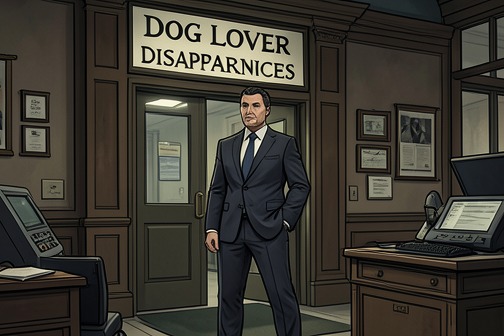
The [Saitama Dog Lover Serial Disappearances](entity:event-recall-event-saitama-dog-lover-seria-26a1d533aa94) is an investigation into people who vanished after becoming associated with dog breeder [Gen Sekine](entity:character-recall-character-gen-sekine-1dbe71f25588) near [Kumagaya](entity:location-recall-location-5d10494d693d). A renewed inquiry connected a decade-old series of disappearances to Sekine, but the eventual closure did not settle how many people had been killed. In [Jake Adelstein](entity:character-recall-character-jake-adelstein-a6696f64c12c)’s account, the case turns on the recovery of forgotten leads, the precarious exchange of information among police and underworld sources, and a scoop lost just before the arrests.
## Background and rediscovery
By the time the case reached Adelstein, Sekine was suspected of being a serial killer with some form of yakuza connection: he was described as a yakuza, an ex-yakuza, or a yakuza affiliate. Several people associated with him had disappeared over the preceding ten years. Saitama police had investigated the first three disappearances, but the leads dried up and the original case was largely forgotten.
The disappearance of [Akio Kawasaki](entity:character-recall-character-akio-kawasaki-8006f2374aa6), president of a waste management company, brought the old pattern back into view. After Kawasaki failed to return home for several days, his wife went to the police. Officers initially asked routine questions about his behavior, home life, and possible enemies. Her answers did not point to an obvious explanation. But when she mentioned that her husband had disagreed with a dog breeder, the officer in charge became grave and warned her to prepare for the worst if Kawasaki had been involved with Sekine. A missing-person inquiry had suddenly acquired a suspect and a history.
In January, Adelstein and [Yamamoto](entity:character-recall-character-yamamoto-a83bb41da631) were in the office when a police source known as the Cobra brought them the case, insisting that the information was highly confidential. Adelstein’s reporting focus had shifted to organized crime, theft, and public security; the emerging investigation brought those concerns together. By the end of January, the Yomiuri team had assembled a working picture of four missing people believed to have been killed: Kawasaki, a housewife, a yakuza boss, and his driver. The suspected connection was clearer than the motives, which investigators and reporters still could not establish.
## Leads, intermediaries, and a changing case
The investigation advanced through information passed between police, reporters, and underworld figures, rather than through a single decisive discovery. A source told Adelstein that Sekine’s situation might involve an internal power struggle, but presented that as a guess, not a demonstrated motive. The distinction matters: the case generated theories before it yielded proof, and access to people who might know more did not guarantee that their information could immediately be used.
When Adelstein passed what he had learned to a source, that person contacted [Takada](entity:character-recall-character-takada-86eeb5903fc9). Takada had Sekine in his hands and invited the source to listen to his questioning, but the source declined, telling him not to kill Sekine and asking to hear what the questioning revealed. This exchange shows how the inquiry depended on personal assurances as well as official investigation. The source’s refusal did not end the cooperation; Takada gave his word, and the source relied on it.
Arai’s revelations then redirected the investigation. He had not participated in the disappearances of the last four victims, but his driver, [Shima](entity:character-recall-character-shima-9feaa35a4263), had. Arai had learned from Shima that Sekine poisoned Endo and his driver, [Wakui](entity:character-recall-character-wakui-9e6150b675d0), and that Shima helped bury them. That account made Shima the crucial witness: what he knew could implicate Sekine. Police arrested Arai on a fraud charge, expecting that his information about Shima would be more useful than a confession to a much older murder that would be difficult to prove without a body.
The route from Arai to Shima was complicated by the existence of tapes. On the day Arai was arrested, the Consigliere told Takada about them. Takada immediately contacted Shima and demanded that he reveal where Endo’s body was, threatening that Shima himself would otherwise need a burial place. For a time, the investigation stalled. [Sekiguchi](entity:character-recall-character-sekiguchi-1f2cb88ba474) left the team in November, and the unspoken assumption was that Shima had been killed and the case would remain unsolved.
## Arrests and the case’s closure
Takada continued pursuing Shima. In late November, he tracked him down after Shima had changed his name and married, then passed the information to Sekiguchi, who reported it to Saitama police. Shima was arrested in December. Confronted with the existence of the tapes, he cooperated. The police searched a site in [Gunma Prefecture](entity:location-recall-location-0c41e858d83f) that Shima identified and found enough of Kawasaki’s teeth to support their case. The search was conducted by a small team, without the Yomiuri or other outside observers knowing about it.
On January 5, after the New Year’s holidays, Saitama police released Shima on bail and announced the arrest of Gen Sekine and his wife, Hiroko, for the dismemberment of Kawasaki. Sekine admitted almost everything within hours of his arrest. After an investigation that had occupied a year and reached back, in one sense, more than a decade, police declared the Saitama Dog Lover Serial Disappearances case closed.
Closure did not mean that Adelstein obtained the scoop. The Yomiuri team had planned to withhold publication until just before Sekine’s arrest, but that plan had already fallen apart. Adelstein later understood that he had missed an opportunity by failing to keep close watch on the open case over the holidays and by not giving Sekiguchi his home phone number. The source had risked calling the office, but Adelstein was not in a position to act on the information in time. The case’s resolution therefore brought both an investigative conclusion and a professional failure: he knew the plan and had a strong lead, yet did not report the decisive discovery first.
## What remained unknown
Sekine and his wife were convicted of murdering four people. That number defines the proven outcome, not necessarily the full extent of the crimes. How many people they actually murdered remains a mystery. The gap between the suspected disappearances, the evidence recovered, and the four murders established in court prevents the case’s official closure from serving as a complete accounting of its victims.
Event 7
Lucie Blackman Disappearance Case

The [Lucie Blackman Disappearance Case](entity:event-recall-event-lucie-blackman-30aa0fa7e6f9) began with a young woman’s failure to return from a meeting with a customer and became a pivotal investigation in [Jake Adelstein](entity:character-recall-character-jake-adelstein-a6696f64c12c)’s career. As he later recognized, the search exposed him to sexual exploitation and human trafficking that he had not previously understood as part of the nightlife he was covering.
## Background and Disappearance
[Lucie Blackman](entity:character-recall-character-lucie-blackman-0ae0e48712d8) was a British national who arrived in [Japan](entity:location-recall-location-japan-2b426de89e42) on May 4, 2000, with her friend [Louise Phillips](entity:character-recall-character-louise-phillips-2724459eb504). She had worked part-time as a stewardess for British Airways, but debt and the strain of jet lag had made the job difficult. Phillips encouraged her to try hostess work in Japan, presenting it as an opportunity to earn money while taking what could feel like a working holiday. The two women found low-cost lodging in a foreign-resident apartment building, where visa checks were almost nonexistent, and began working at Casablanca, a hostess club in the [Roppongi district](entity:location-recall-location-d85bf963350c).
On July 1, three weeks after their arrival, Lucie called Phillips from Shibuya. She said she was meeting a customer from the club who planned to buy her a cell phone. Later that evening, she called again to say she was on her way home. She never arrived. The sequence left an ordinary promise of a purchase hanging over the disappearance: Lucie had gone to meet a customer, then was heard from once more, but did not return.
Two days later, Phillips received a call from a Japanese man who identified himself as Akira Takagi. He claimed that Lucie had joined a cult in [Chiba](entity:location-recall-location-f69d5fbc938b) Prefecture and could not come home, while insisting that Phillips should not worry. The call instead heightened her concern. She sought advice from the British Embassy and went to the [Azabu police station](entity:organization-recall-organization-ed10f2bde901) to report Lucie missing. Local officers were reluctant to take the case at first; the unexplained call, and the embassy’s involvement, made it difficult to ignore. On July 9, the [Tokyo Metropolitan Police Department](entity:organization-recall-organization-5932fff45c51)’s Investigative Division 1 formally assumed responsibility, moving the case from local policing to headquarters.
## The Family and the Reporter
Adelstein’s involvement began while the disappearance was still being handled cautiously. Senior police reporter [Nishijima](entity:character-recall-character-nishijima-26ee66515fd1) asked him to help cover the case before the Tokyo Metropolitan Police Department had made an official announcement. The details remained vague, and Nishijima warned him to keep quiet for the time being. Adelstein later had to call Lucie’s father, [Tim Blackman](entity:character-recall-character-tim-blackman-4ad3eefe1343), in Britain, as he had promised. Tim wanted to hear definite news directly from someone he knew rather than encounter it first in a newspaper. Because the police had become alienated from him and did not want information passed on to the press, he could not rely on them to keep him informed. Adelstein’s call thus carried a personal obligation alongside the reporter’s work: when there was definite news, he had promised to tell Tim, at any hour.
## An Undercover Inquiry
Adelstein found that a press credential would not open the doors he needed in Roppongi: many of the foreign workers there were undocumented or otherwise wary of both police and journalists. He therefore adopted a false identity as an insurance investigator, made a business card and obtained a second cell phone. Dressing as a well-paid foreign businessman, he spent weekends in the area, looking for people who might know Lucie or the customer who had taken her toward the coast. The disguise was not incidental to the investigation; it was the means by which he could enter a world where declaring himself a reporter would have closed off conversation.
One lead came from Slick, who told him that a hostess had previously accused a frequent customer known as Yuji of assault. Slick supplied information about the woman’s trip with the customer, including the Izu Marina and a residence in [Zushi](entity:location-recall-location-5235a9e52b1f). The account gave investigators a location to pursue, but Yuji remained an elusive figure: he was described as a wealthy, well-dressed regular at foreign-hostess clubs who favored blondes, and no one had a photograph or business card for him. Another name surfaced among people Adelstein questioned: [Joji Obara](entity:character-recall-character-joji-obara-7487d7785021), a wealthy property developer who also frequented the clubs and seemed to fit the description. Adelstein passed the information to police, who already knew of Obara; the two names were leads, not yet an established identification of the same man.
By October 1, Obara was a definite suspect. On October 12, police arrested him in connection with a separate sexual-assault case. The police announcement said the investigation had uncovered multiple assaults on foreign women and described a recurring pattern in which a man persuaded them to go for a drive, gave them drugged alcoholic drinks, and assaulted them after they became incapacitated. Investigators regarded that pattern as strongly resembling the circumstances surrounding Lucie’s disappearance. Because the case had drawn attention in Japan and abroad, the police expanded the original special unit into a Special Investigation Headquarters, assigning more than a hundred officers to investigate. The shift widened the inquiry from a missing-person case toward a search for links among assaults on foreign women, while the connection to Lucie remained a resemblance under investigation rather than a conclusion announced in the evidence here.
## A Wider System Comes into View
The disappearance also became the point from which Adelstein began to recognize a wider pattern of exploitation. He later wrote that, while searching for Lucie, he had not yet understood how human trafficking operated beneath the visible sex industry; only in the years that followed could he make sense of what he had encountered. Reports of foreign women being compelled to work without pay—including women from Poland, Russia, and Estonia—made clear that the inquiry’s significance extended beyond the fate of one missing hostess.
The institutional response to those women exposed a recurring trap. Adelstein found that victims could be arrested for working illegally on tourist visas and deported even when their testimony might help authorities pursue club operators. Police treated the women’s immigration violations, limited Japanese-language ability, and difficulty giving evidence as obstacles to prosecution. Once deported, they were harder to reach as witnesses, while the people who had exploited them could remain difficult to charge. The process risked punishing the women while weakening the cases against those responsible.
Adelstein’s later reporting shifted attention from individual offenders to the government’s failure to protect victims. The [International Labour Organization](entity:organization-recall-organization-06dd7b2628ac) had conducted a Japanese-government-funded study of trafficking in Japan that criticized the country’s failure to punish traffickers or care for victims. The government had ordered the report kept from publication, but Adelstein obtained a copy through sources. The [Yomiuri Shinbun](entity:organization-recall-organization-3c2abdf2982d) published it on [November 19, 2004](entity:time-recall-time-2004-11-19-a37a3ac407a2), and ran a follow-up the next day. According to a source, the coverage prompted substantial revisions to a government action plan intended to strengthen victim protection. The reporting did not resolve Lucie’s disappearance in itself; it carried the inquiry’s exposure of vulnerability into a wider challenge to official policy.
His work also crossed the boundary between reporting and direct assistance. Adelstein cultivated sources to speak with victims, but often could learn little about the people who had exploited them. He spent substantial portions of his salary helping women he met, including arranging access to abortions and paying airfare when needed. He recognized that such involvement departed from journalistic objectivity, yet regarded support for women who had been raped or forced into unwanted services as a responsibility he could not set aside. In this longer arc, the case’s importance lies not only in the investigation it initiated, but in how it led him to confront the systems that left foreign women exposed and their victimizers difficult to pursue.
## The Limits of the Early Leads
A crucial lead came with a history of its own: years earlier, one of Slick’s employees had wanted to report an assault by a regular customer known as Yuji, but Slick had talked her out of going to the police. He had not barred Yuji from the club; instead, he warned the women to be cautious around him. When Slick later shared what he knew with Adelstein, the account included the Izu Marina and a residence in Zushi. Those details gave investigators something concrete to pursue, but the earlier silence had left the customer’s identity uncertain: nobody had a photograph or business card for Yuji, and the information did not by itself establish that he and Joji Obara were the same person.
Event 8
Mei-sei 56 Building Fire
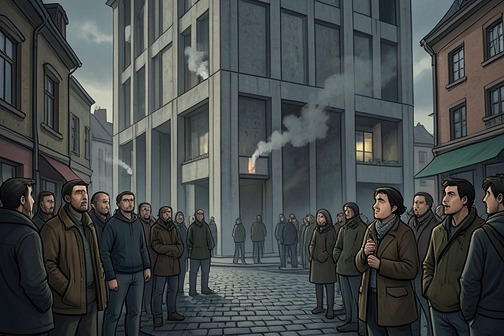
The [Mei-sei 56 Building Fire](entity:event-recall-event-mei-sei-56-6facea124b99) was a deadly September 2001 disaster that brought renewed attention to the dangers and lawlessness of [Kabukicho](entity:location-recall-location-kabukicho-3b9c43a4f9f0). Forty-four people died, and the fire became a probable impetus for the [Tokyo Metropolitan Police Department](entity:organization-recall-organization-5932fff45c51)’s effort to clean up the district, which had once been [Tokyo](entity:location-recall-location-tokyo-0b4edfa3fe2f)’s largest, most volatile, and most profitable red-light area.
## Background and Circumstances
The building was owned by Shigeo Segawa, a yakuza-connected businessman known as the King of Soapland. Its safety violations had been cited repeatedly before the fire. Against the backdrop of a district where lawlessness had become conspicuous, those unresolved hazards gave the disaster significance beyond the building itself: it drew attention to the conditions in which businesses operated across Kabukicho.
## Aftermath and Significance
Under Governor Shintaro Ishihara, the Tokyo Metropolitan Police Department made a concerted effort to clean up Kabukicho, leaving the district a shadow of its former self. The account presents the fire as a probable impetus for that campaign rather than a certain, singular cause. It also leaves open whether such a sweeping transformation was necessary, suggesting that enforced compliance with safety regulations might have addressed the immediate problem. That qualification makes the fire a turning point in the account not only because of the lives lost, but because it exposed the choice between correcting dangerous practices and remaking the district around them.
Event 9
Lucie Blackman disappearance and murder case
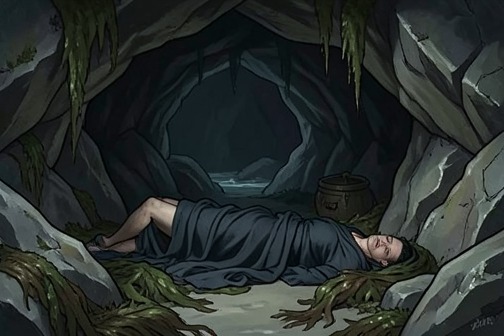
The [Lucie Blackman disappearance and murder case](entity:event-recall-event-lucie-blackman-disappea-cbe71ac2c4b9) became both a criminal investigation and a test of how Japanese authorities responded to violence against foreign women. [Jake Adelstein](entity:character-recall-character-jake-adelstein-a6696f64c12c)’s reporting helped establish that Lucie had met [Joji Obara](entity:character-recall-character-joji-obara-7487d7785021); months later, a renewed search in [Miura](entity:location-recall-location-miura-0915e25f58a9) found her remains concealed in a coastal cave. The subsequent trials produced sharply divided findings, while the case left unresolved questions about how Obara had evaded detection and why crimes against women were so often treated as low priority.
## Investigation and the emerging connection
The investigation brought Obara into focus as police examined the circumstances of Lucie’s disappearance. By October 1, he was regarded as a suspect; on October 12, police arrested him in a separate sexual-assault case. Their press release described a pattern in which foreign women were drawn into drives, given drinks containing drugs, and assaulted after losing awareness. Police said the circumstances resembled those surrounding Lucie’s disappearance. The other cases gave investigators a reason to examine Obara, but did not yet establish what had happened to Lucie.
Adelstein pursued information among people connected to the nightlife district. Near a bookstore, he encountered Lucie’s former boyfriend, Nick, who was handing out flyers for a nightclub. Nick asked for money in exchange for information about Lucie. Adelstein paid him 5,000 yen and showed him a police sketch of Obara; Nick did not recognize the man. Adelstein offered to pay for a photograph and left. The encounter illustrates the uncertain, transactional nature of reporting in the case: potential sources might have information, but establishing what they knew required persistence and money.
Information from another source brought Adelstein a more consequential lead: Lucie and Obara had met, and witnesses could support that account. He passed it to [Yamamoto](entity:character-recall-character-yamamoto-a83bb41da631), his editor. The information became a scoop for the [Yomiuri Shinbun](entity:organization-recall-organization-3c2abdf2982d), which reported the connection roughly a week before other newspapers. The article angered the [Tokyo Metropolitan Police Department](entity:organization-recall-organization-5932fff45c51), which had wanted to surprise Obara. The timing thus carried a professional consequence as well as an investigative one: publication established an important connection for readers while frustrating the police’s preferred approach.
## The search and discovery
The investigation also turned toward a false note sent to the Blackman family. A private investigator hired by the family told Adelstein that police had requested a sample of Lucie’s handwriting, apparently to determine who had written the note and whether its signature was genuine. [Tim Blackman](entity:character-recall-character-tim-blackman-4ad3eefe1343) had already said it was not Lucie’s signature, but investigators still sought to verify that judgment. The note had the potential to misdirect the family and the investigation; comparing handwriting offered a way to test its claim rather than accept it at face value.
On February 9, nearly a hundred officers returned to the beach in Miura, where police had searched almost four months earlier. The official explanation was that analysis of the distance shown on the speedometer of a car Obara had rented shortly after Lucie vanished helped identify where he might have left her body. A veteran Mainichi reporter speculated that police had found the body on the first search but delayed announcing it until Obara’s account could make the case more secure. The memoir presents that as a possibility, not an established fact. What was clear was that the new search came after a long interval and amid continuing uncertainty about what police knew and when.
[Jane Blackman](entity:character-recall-character-jane-blackman-0f07b32801bb) had been brought to [Japan](entity:location-recall-location-japan-2b426de89e42) a week before the search and kept in a hotel away from the press. Accompanied by victim-support officers from [Scotland Yard](entity:organization-recall-organization-f9976eb29f75), she was questioned in detail about Lucie’s physical characteristics, health, diet, and habits. The police disclosed little to her, while Tim remained largely uninformed. When the searchers found Lucie’s remains in a makeshift wall in a cave along the oceanfront, identification could not be completed that day. Tim nevertheless understood the reason for Adelstein’s call before he was told what had been found. Lucie was positively identified on February 10.
## Charges and changing verdicts
In early April, Obara was formally charged with raping Lucie, causing her death, and concealing and abandoning her body in the cave. The legal outcome was not a single, stable judgment. In his first trial, Obara was acquitted of the charges concerning Lucie. He was nevertheless sentenced to life imprisonment for eight rapes and other charges, and the case proceeded through appeal. A later ruling in December 2008 found him guilty of dismembering and abandoning Lucie’s body, but not guilty of her rape or manslaughter. In the same month, he was convicted of eight rapes and one count of rape resulting in death. The distinctions among these findings matter: the court established responsibility for offenses involving Lucie’s remains while not finding him guilty of raping or killing her.
For the Blackman family, the end of uncertainty did not mean that every question had been answered in court. The identification confirmed Lucie’s death, but the verdicts left a gap between the physical evidence and the charges on which Obara was convicted. Adelstein records his bewilderment at the acquittal on the Lucie-related rape and death charges, while also noting Obara’s life sentence for other sexual offenses. The sequence of trials and later ruling turned the case into a prolonged legal reckoning rather than a conclusive resolution of every allegation.
## Broader significance
Adelstein rejects the idea that Lucie’s case should be dismissed as an exceptional crime in an otherwise safe country. Its central question, as he frames it, is how Obara could allegedly assault women over more than a decade without being caught sooner. He argues that the underlying weakness was not limited to crimes against foreign women: violence against women generally received inadequate attention. In his assessment, police did not sufficiently anticipate how stalking could escalate into serious injury or death, and the low penalties and possibility of suspended sentences for first-time rape offenders reinforced the low priority assigned to sexual assault.
Later reporting on trafficking gave Adelstein another view of the institutional difficulties facing foreign women. He encountered women who described being forced to work without pay, but police told him that a woman working illegally on a tourist visa would have to be arrested and deported even if she testified against exploiters. Adelstein pointed to a [National Police Agency](entity:organization-recall-organization-f33ab0afb849) directive calling for serious efforts against trafficking and care for victims; the officer he spoke with said that, in practice, victims were classified as illegal workers and sent home, leaving investigators without witnesses. These later cases were not presented as part of Obara’s crimes, but they sharpened the wider question raised by Lucie’s disappearance: whether systems designed around immigration enforcement could recognize and protect vulnerable women, or instead make their experiences harder to investigate.
Adelstein’s later investigation also exposed the distance between official policy and practice. A government-funded International Labour Organisation report criticized Japan’s failure to punish traffickers and care for victims, but the government had ordered the report kept from publication. Adelstein obtained a copy and published it in the Yomiuri Shinbun in November 2004, followed by another article the next day. A source told him the reporting had prompted substantial changes to a government action plan. This later work widened the significance of the Blackman case: the disappearance and murder investigation concerned one woman and one suspect, but the questions it left about attention, protection, and accountability reached beyond a single case.
Event 10
Carita Ridgway rape and death

Carita Ridgway’s rape and death became part of the record of offenses associated with [Joji Obara](entity:character-recall-character-joji-obara-7487d7785021), whose arrest during the investigation into [Lucie Blackman](entity:character-recall-character-lucie-blackman-0ae0e48712d8)’s disappearance brought earlier cases back into view. Ridgway, an Australian woman, died after Obara used chloroform to incapacitate her and sexually assaulted her; her parents were told that she had died of food poisoning. The account makes the case significant not only as an earlier crime, but as an example of how a victim’s death could be misrepresented and remain difficult to investigate.
## The 1992 Crime and Its Concealment
The account dates the case to 1992 and identifies Ridgway as an Australian woman. It reports that Obara used chloroform, filmed the assault, and that Ridgway later died of liver failure. Her parents were told that the cause was food poisoning, leaving them with an explanation that did not disclose the assault.
The narrator questions whether an autopsy was performed, noting that autopsies were rarely conducted even when Japanese people died under suspicious circumstances. That uncertainty matters: the account does not establish that no autopsy occurred, but it shows how the absence of routine examination could leave a suspicious death without the scrutiny needed to reveal its circumstances.
## Rediscovery During the Obara Investigation
Ridgway’s case re-entered the narrative when Obara was arrested and rearrested on multiple charges during the investigation surrounding Lucie Blackman’s disappearance. The charges included Ridgway’s 1992 manslaughter and several rape cases. The sequence places her death within a broader pattern of offenses that investigators were pursuing, while distinguishing the earlier case from the immediate search for Blackman.
The account also describes a recurring institutional obstacle in cases involving exploited foreign women: authorities could arrest club operators under immigration laws while victims faced arrest and deportation for working illegally. The narrator reports that this could leave investigators without witnesses and make prosecution on more serious charges difficult. This wider context does not establish that the same procedure determined the handling of Ridgway’s case; it underscores the vulnerability of victims and the limits of a system that could treat immigration violations more readily than exploitation.
## Conviction and Significance
In December 2008, Obara was convicted of eight rapes and one count of rape resulting in death. The conviction came long after Ridgway’s death and after the account’s description of her parents being given a food-poisoning explanation. It established a later legal outcome within the wider set of cases against Obara, though it did not undo the years in which the circumstances of Ridgway’s death had been obscured.
The case also sits beside the narrator’s broader criticism of [Japan](entity:location-recall-location-japan-2b426de89e42)’s response to trafficking and sexual exploitation. He describes an [International Labour Organization](entity:organization-recall-organization-06dd7b2628ac) report, funded by the Japanese government, that found failures to punish traffickers and care for victims, and says the government had tried to keep it from publication. Ridgway’s case is not presented as proof of every finding in that report; rather, its delayed recognition gives concrete weight to the book’s concern with failures of investigation, accountability, and protection.
Event 11
1999 Japan Airlines hijacking

The [1999 Japan Airlines hijacking](entity:event-recall-event-1999-japan-airlines-hij-946680236b49) became a turning point in a late-1990s Japanese media debate over mental illness, criminal responsibility, and the public identification of suspects. After a mentally ill man hijacked a plane departing Haneda and stabbed its captain, news organizations first largely withheld his name in keeping with customary practice. That restraint gave way to widespread identification and detailed reporting of his psychiatric history. Journalist [Mami Hamaya](entity:character-recall-character-mami-hamaya-244b12ebf23f) objected to the shift and to the broader prejudice it reinforced.
## Background and the hijacking
In the late 1990s, Japanese public discussion included calls for law-enforcement authorities to have greater power to forcibly confine people with mental illness. Hamaya followed these questions professionally: her work concerned how the law should respond when people with mental disabilities broke it, and she advocated for people with disabilities. Against that backdrop, the hijacking brought questions of public safety, criminal responsibility, and privacy into sharp conflict.
On [July 23, 1999](entity:time-recall-time-1999-7-23-5610de956668), a [Japan](entity:location-recall-location-japan-2b426de89e42) Airlines plane leaving Haneda, [Tokyo](entity:location-recall-location-tokyo-0b4edfa3fe2f) International Airport, was hijacked by a man with a history of mental illness and prior hospitalization in a mental hospital. During the hijacking, he stabbed the captain. He was arrested, and attention quickly turned not only to the crime but to whether the press should disclose his identity. The initial reluctance to name him followed the prevailing custom in cases involving a history of mental illness; it did not settle the argument for long.
## The change in press coverage
On July 27, the conservative [Sankei Shimbun](entity:organization-recall-organization-cc429bafdb0e) began referring to the hijacker by name. The question of how the criminal justice system would assess his mental state remained unresolved in the account: prosecutors did not submit him to a formal competency evaluation before prosecuting him. The book presents that omission as implying that the prosecution considered him capable of criminal responsibility, rather than as the result of a reported formal assessment.
By August 10, Nihon Television, described as the Yomiuri’s sister news station, was also reporting his real name. By the time he was formally charged, almost every news agency was using it. Several outlets went further, disclosing extensive details of his psychological problems and medical history. The coverage thus moved from withholding a suspect’s identity under an established convention to making both his name and private health history widely available.
## Hamaya’s objection
Hamaya strongly opposed publishing the man’s name and criticized the way the story was being covered. Her objection was not presented as a denial of the hijacking or the captain’s stabbing. She challenged the inference encouraged by the reporting: that receiving treatment for mental illness placed a person close to committing a terrible crime. In her view, coverage of one person’s act was being used to cast suspicion on mentally ill people as a group.
The narrator initially resisted her argument. Still shaped by a police-beat outlook, he thought in terms of punishing offenders rather than rehabilitating them and treated claims of mental illness as potentially fraudulent attempts to avoid prison. After Hamaya explained more about the hijacker’s history and the calls reaching mental-health clinics, the narrator began to understand her concern. His account emphasizes the gap between reporting a specific crime and turning it into a general judgment about a whole population.
## Public meaning and narrative role
The episode illustrates how a dramatic crime could alter the boundaries of acceptable reporting. The initial restraint around the suspect’s name did not prevent newspapers from later publishing it; as the story developed, identifying him and exposing his medical history became increasingly routine. The book links that change to coverage that generalized from one case, helping to revive older prejudices and encourage discrimination against people with mental disabilities.
Hamaya did not retreat to fit the prevailing direction of coverage or an unstated newspaper policy. Her integrity and disagreement with the dominant framing brought professional consequences: she was labeled a troublemaker and a radical, and the narrator describes that period as the beginning of a difficult time for her. The hijacking therefore functions in the narrative both as a criminal event and as the occasion for a dispute over who bears the costs of public disclosure. It also marks a change in the narrator’s understanding: Hamaya’s account unsettles his reflex to treat punishment as the only relevant response and makes the stigmatizing effects of the press’s generalizations harder to ignore.
Event 12
Mami Hamaya's suicide

[Mami Hamaya](entity:character-recall-character-mami-hamaya-244b12ebf23f)’s suicide is recounted as the devastating end of a workplace conflict that had stripped a conscientious reporter of the work she considered her responsibility. Her opposition to stigmatizing coverage was treated as defiance, and her reassignment from the National News Department left her grieving both a professional identity and a future she had fought to preserve. The narrative does not establish a single cause of her death. Instead, it records the institutional pressure around her, the abruptness of the news, and the unanswered message that [Jake Adelstein](entity:character-recall-character-jake-adelstein-a6696f64c12c) could never bring himself to open.
## Reporting and the Price of Dissent
Hamaya objected to coverage that treated a violent crime involving a person believed to have a mental illness as evidence about mentally ill people generally. After Mamoru Takuma attacked children at Osaka University of Education Ikeda Elementary School on [June 8, 2001](entity:time-recall-time-2001-6-8-36d182150131), the investigation indicated that the crime had been premeditated and that Takuma had feigned mental illness in hopes of avoiding prosecution. Hamaya continued to argue that the case did not justify blanket claims that mental illness was commonly faked or linked to violence. Her position was not a denial of the crime; it was a refusal to turn one case into a judgment about a wider group.
That distinction brought her into conflict with the institution around her. The narrator describes a media climate in which coverage could reinforce prejudice, while Hamaya would not retreat from her articles to satisfy an unstated company policy. Some colleagues and editors branded her a troublemaker and radical, and her integrity and commitment to the subject were read as insubordination. The professional consequences followed: the reporter’s disagreement over how to write about disability became a reason to remove her from reporting.
## Removal from the News Department
The transfer was not a sudden misunderstanding. [Kikuchi](entity:character-recall-character-kikuchi-2dc3e7408443), the department chair, had requested it on August 29. On September 12, Hamaya was told at a meeting that she was being moved out of the National News Department and assigned to Human Resources. Days before the meeting, her superior had summoned her to his desk and presented the move as an ultimatum: accept the assignment, resign, or be fired. He also told her that she would never again work as a reporter at the company. No explanation was given.
Hamaya had already resisted a different proposed departure. A month earlier, the department chair had told her she would be moved to Yomiuri Weekly. She replied that she wanted to stay in the National News Department because, as she saw it, no one else there could properly cover people with mental and physical disabilities. Her refusal was taken badly. The later assignment to Human Resources therefore ended more than a particular reporting job: it overrode the role she had argued she was needed to perform.
At the September meeting, Hamaya was allowed to make her parting remarks. Her voice cracked, and she nearly cried as she tried to finish. That evening, she and Adelstein had dinner at an Italian restaurant in Aoyama. As she recounted the ultimatum, she broke down crying and rested her head on his shoulder. He stayed with her until she could stop. He tried to reassure her that the department head would not remain in place forever and that she would write again, but his encouragement could not undo what had just happened. The narrative presents this scene as an immediate witness to her distress, not as proof of a simple, sufficient explanation for her later death.
## The News and Its Uncertain Circumstances
Hamaya’s death reaches Adelstein through a conversation. When he asks whether she is getting married or has a boyfriend, the person speaking with him tells him that she has died by suicide. He initially fails to understand that the news is literal, then asks what happened. He is told that her parents found her body in her apartment that day and that she had apparently hanged herself. Weekly magazines were already making inquiries, and he was warned to be careful.
The account marks the limits of what Adelstein knows: the manner of death is reported to him, rather than shown through a scene he witnessed, and the narrative supplies no note or final explanation from Hamaya. His response is stunned silence and a feeling of having been struck. The sequence links the news to the preceding story of her removal and humiliation, but it does not claim that the transfer alone explains her suicide. Keeping that distinction matters: the passage gives evidence of institutional harm and personal anguish while preserving uncertainty about the full circumstances of her death.
## The Unopened Message
The loss acquires a second, unresolved form the day after the funeral. Adelstein checks his work email, which he rarely did, and sees an unopened message from Hamaya. It had been sent about two days before her death. He never opens it, and he says he will not search for a backed-up copy. The message remains unread, its contents unknown; the narrative does not turn it into a posthumous explanation.
Instead, the narrator uses the word yarusenai for the accumulation of regret attached to the email: the message never answered, the advice that may have been bad, the call that should have been made, and the friends one suspects might have been saved. The unopened message is thus both a concrete detail and a boundary in the account. Adelstein can tell what the loss has come to mean for him, but he refuses to pretend that he knows what Hamaya wrote or whether reading it would have changed anything. Her death remains inseparable from the work she was prevented from doing and the sorrow of those left with questions, without being reduced to a conclusion the evidence cannot support.
Event 13
Susumu Kajiyama loan-sharking case
The [Susumu Kajiyama loan-sharking case](entity:event-recall-event-susumu-kajiyama-loan-sh-07b38430f093) revealed how an organized-crime enterprise could resemble a legitimate consumer-finance franchise while drawing profit from illegal lending, debt collection, and a web of associated businesses. [Susumu Kajiyama](entity:character-recall-character-susumu-kajiyama-1c7708402587)’s network reached close to a thousand loan-sharking outlets across [Japan](entity:location-recall-location-japan-2b426de89e42), and investigators eventually pursued its money through [Tokyo](entity:location-recall-location-tokyo-0b4edfa3fe2f) and [Las Vegas](entity:location-recall-location-las-vegas-96bec1c037c8) to a Swiss bank account. His conviction brought a prison sentence and changes to lending law, though the scale of the operation and the money not recovered left the outcome far from a complete accounting.
## Building a nationwide lending operation
[Kajiyama](entity:character-recall-character-kajiyama-63a7255e8f80), a corporate blood brother of the [Goryo-kai](entity:organization-recall-organization-4c83e00f1b1d), a subdivision of the [Yamaguchi-gumi](entity:organization-recall-organization-yamaguchi-gumi-6dea21d63647), began building his network in 2000. The [Tokyo Metropolitan Police Department](entity:organization-recall-organization-5932fff45c51) announced a warrant for the operation’s leader while [Jake Adelstein](entity:character-recall-character-jake-adelstein-a6696f64c12c) was working a night shift. The case stood out to him not only because its target was a senior figure in the Yamaguchi-gumi, but because the police unit handling it was the Community Economic Safety Division rather than the Organized Crime Control Bureau. The alleged offense involved Japan’s Investment, Deposit, and Interest Rate Control Law.
The enterprise found customers among people with poor credit who could no longer borrow from consumer-finance companies. Kajiyama’s operation acquired databases of heavily indebted borrowers and used personal calls and email to solicit them. Its storefronts were designed to look much like ordinary consumer-loan shops: customers encountered a conventional business setting and could obtain loans that other lenders would refuse. The cost, however, could reach between ten and 1,250 times the interest permitted by law.
Repayment pressure extended beyond the borrower. Collectors could persistently contact debtors, their spouses, and their employers, using threats to demand payment. The account describes the consequences as severe: the pressure drove some borrowers to suicide. The operation’s reach was reflected in the number of people affected; investigators considered more than sixty thousand borrowers who had paid illegal rates, while police estimated the group’s revenue in the billions of dollars.
## The corporate machinery behind the loans
Kajiyama’s business was not limited to lending. Its numerous fronts included real estate and construction businesses, a share in a marina, and other operations that connected the loan shops to a larger commercial network. Employees were directed to spend money within that network: shop workers had to buy lunches from SK Shokuhin, while managers were expected to dine at a Korean barbecue restaurant owned by one of Kajiyama’s associates. Organized trips to designated hot springs and beach resorts added further channels for moving funds. The purchases and arrangements were presented as routine workplace expectations, but the book describes them as ways of laundering the proceeds of the lending shops.
The network’s naming and public presentation helped it pass as ordinary business. Many fronts used the initials SK, as in SK Housing and SK Finance. In [Shinjuku](entity:location-recall-location-shinjuku-17bbde8f9594), SK Finance looked much like a branch of a listed consumer-loan company, displayed its government license, and held a Tokyo-issued rating for this kind of business. It also operated as a real-estate company. That combination let the group take property as collateral, seize it after a default, and sell or lease it without relying on an outside intermediary.
This structure depended on more than Kajiyama and his yakuza connections. A colleague assessing the case argued that the participation of several hundred non-yakuza workers was a more revealing part of the story than the expected criminality of the gang itself. Kajiyama’s operation used civilian employees and business services to make an illicit enterprise function at scale. Its corporate form did not conceal a single illegal activity so much as distribute the work across ordinary-looking companies, staff, and transactions.
## Following the money abroad
The central investigative question became what had happened to the profits. A large share was presumed to flow to the Yamaguchi-gumi, but it did not appear in Japanese bank accounts. Kajiyama had spent time in the [United States](entity:location-recall-location-united-states-2f533bc8d0b9) and, according to a source in Las Vegas, had lost a couple of million dollars gambling at the [MGM Grand](entity:location-recall-location-mgm-grand-79d100c1847d). The source also described cash held in a safe-deposit box and overseas bank accounts. An FBI contact in Washington, D.C., confirmed that Tokyo police had visited Las Vegas and seized two million dollars from the MGM Grand’s office in Tokyo.
Jake Adelstein and colleagues worked out a publication sequence with a Tokyo police division chief. Their reporting on Kajiyama’s Las Vegas activity would appear first; the Tokyo Metropolitan Police Department would then announce the seizure, followed by a rearrest on Japanese money-laundering charges. The journalists also expected to report on an FBI investigation into possible money laundering in the United States. By mid-November, a run of stories covered the cash seizure, the FBI inquiry, and Kajiyama’s Las Vegas spending. A subsequent arrest of an associate who had withdrawn more than a million dollars from Kajiyama’s account and traveled repeatedly to the United States carrying cash gave the investigation another concrete link in the financial trail.
The Las Vegas findings were only part of the picture. A few weeks later, it emerged that more than fifty million dollars had been placed in a Swiss bank account with assistance from a Japanese employee of [Credit Suisse](entity:organization-recall-organization-c64a8292082f). [Switzerland](entity:location-recall-location-switzerland-0000fd9db54c) froze the account. The revelation eclipsed the earlier seizure in scale, but it did not resolve how much money the network had moved or where all its assets were. A further episode showed that cash remained accessible: around the time of Kajiyama’s arrest, an associate arranged for one million dollars to be delivered from a [Caesars Palace](entity:location-recall-location-caesars-palace-46a2fa9be284) representative to a parking lot in central Tokyo.
## Conviction and consequences
Kajiyama did not confess during the repeated arrests and releases described in the account. On February 9, 2005, he was sentenced to seven years of hard labor. The Tokyo courts initially did not impose the five-billion-yen fine that would have equaled the fifty million dollars identified in the Swiss account. The sentence therefore left open the question of how much of the operation’s gains remained beyond investigators’ reach; the book notes the likelihood that Kajiyama still had money concealed elsewhere.
The network changed after the conviction. Kajiyama’s associates dispersed, and the Goryo-kai ceased to exist under that name. Some former associates moved into elaborate telephone scams in which criminals impersonated a victim’s child or grandchild and claimed to need an urgent money transfer. The enterprise’s form shifted, but some participants continued making money through fraud.
The case also had a legislative consequence. Japanese lending laws were revised to increase penalties for loan-sharking and to establish a clear ceiling on interest rates that legitimate consumer-loan companies could charge. The investigation thus connected an individual criminal conviction to a wider regulatory response: exposing a nationwide lending structure helped prompt rules intended to constrain both illegal lenders and the rates available to legal ones.
## Significance of the case
The investigation’s distinctive finding was that Kajiyama’s operation worked through the overlap between organized crime and conventional business. Borrower databases, licensed storefronts, real-estate collateral, payroll, restaurants, travel, and foreign financial channels formed parts of a single system for generating and moving money. The case made that system visible through a sequence of local and international inquiries, from loan-shop practices to a Tokyo cash seizure, Las Vegas gambling, and the frozen Swiss account.
Yet exposure and conviction did not amount to full recovery or the end of the network’s methods. The seven-year sentence, the initially absent fine, the unidentified remainder of the money, and the associates’ later turn to telephone fraud mark the limits of the outcome. The law changed, but the case left a more difficult measure of success: not only whether Kajiyama was punished, but whether investigators could account for the wealth and dismantle the business relationships that had made the operation durable.
Event 14
2003 Osaka debt-related triple suicide

The [2003 Osaka debt-related triple suicide](entity:event-recall-event-2003-osaka-debt-related-205ff0498e29) was a family tragedy that made the consequences of predatory lending impossible for the press to treat as an abstract financial issue. In June 2003, a husband, wife, and sibling died by suicide in Osaka after a loan had grown into a debt the woman believed could never be repaid. Her note connected that debt to collectors’ threats and to the police’s inability, as she saw it, to help. The case became the turning point for a newspaper series examining the harm caused by loan sharks in [Japan](entity:location-recall-location-japan-2b426de89e42).
## Debt and the circumstances behind the deaths
The woman’s note described a debt that had snowballed beyond repayment and collectors who had threatened both her and her neighbors. She also wrote that the police could not help. The account does not identify the family’s lenders or establish that a particular operator was responsible for their loan; it presents the deaths within a wider system of coercive collection and illegal lending.
That system had an organized business model. [Susumu Kajiyama](entity:character-recall-character-susumu-kajiyama-1c7708402587)’s operation, described in the surrounding account, targeted people who were already in debt and therefore vulnerable to further borrowing. Its customer database recorded not only debts and payments but personal connections, including family members and supervisors. When a borrower appeared desperate, another shop could offer another loan, often at a still higher rate. This context clarifies how indebtedness could be prolonged and intensified, without proving that [Kajiyama](entity:character-recall-character-kajiyama-63a7255e8f80)’s organization directly dealt with the Osaka family.
## The event and its public consequences
The three deaths drew attention because they made the human consequences of debt collection immediate and visible. The woman’s note shifted the issue from the terms of lending to the pressure surrounding repayment: threats reached beyond the borrower, while the person seeking help believed the police could not protect her. The case therefore exposed not only financial harm but also the isolation of people caught between collectors and inadequate recourse.
The episode also challenged the distance a crime reporter could maintain from the subject. The account warns that attention to criminal ingenuity and efficiency can eclipse the suffering on which a criminal enterprise is built. The deaths restore the victims to view: behind the machinery of lending and collection were people whose lives had been narrowed by debt and fear.
## The newspaper investigation
Before the deaths, the Yomiuri’s resident financial reporter, Mizoguchi, had spent months seeking permission to produce a series on loan sharks’ effects on Japanese society. The topic was sensitive in part because newspapers, including the Yomiuri, earned substantial advertising revenue from consumer-loan companies. The difficulty increased when the reporting found that many such companies were also charging illegal rates.
The Osaka deaths became the pivotal event in the effort to publish. After extended internal persuasion, the newspaper allowed the reporting to proceed, and the account describes the eventual decision as one in which the news prevailed over corporate interests. The sequence gives the case a consequence beyond its immediate victims: their deaths helped make an investigation possible into practices that commercial ties had made difficult to scrutinize.
## Significance
The narrative links a specific family tragedy to a larger economy of debt, repeated borrowing, and intimidation, while stopping short of assigning the family’s case to a named lender. Its importance lies both in what the woman’s note disclosed and in what the disclosure changed: it brought human suffering into a debate that could otherwise remain focused on business models, criminal organization, and newspaper revenue. The deaths did not resolve the wider problem, but they forced the harm into public view and helped move the press toward reporting it.
Event 15
Exposure and crackdown on Slick and Viktor's trafficking operation

The exposure and crackdown on Slick Imai and Viktor’s trafficking operation turned a report from [Helena](entity:character-recall-character-helena-122119b0baeb) into an investigation of a cross-border business that recruited foreign women with misleading promises and then used debt and control to keep them working. The case’s central distinction was between Helena’s own choice of work and the coercion she said other women faced; making that distinction visible helped move the story beyond the clubs and toward the system behind them.
## The report and the operation
Helena contacted [Jake Adelstein](entity:character-recall-character-jake-adelstein-a6696f64c12c) after a friend connected them. She said that women from Poland, Russia, and Estonia at her workplace appeared to be working under duress and were not being paid. She was explicit that her objection was not to prostitution as such: she described her own work as a choice and focused instead on women who, she said, had not chosen it and were being compelled to continue.
Helena identified two men as controlling the recruitment and supply of women: a Japanese operator known as Slick and Viktor, a Dutch-Israeli man. She said they recruited abroad, mainly in poorer countries, through advertisements or brokers, then brought women to [Japan](entity:location-recall-location-japan-2b426de89e42) and placed them in sex clubs. The women, in her account, were promised high earnings but arrived to find different conditions, accumulated charges, and few practical alternatives. Their dependence on the men and the threat of being unable to find other work made nominal employment difficult to leave.
The investigation later identified the business structure behind the allegations. J Enterprise, a Roppongi-based company not registered with Japanese authorities, fronted the operation; Slick Imai owned and ran it, with Viktor as his partner. Slick operated four clubs in Roppongi, supplied the Den of Delicious in Shibuya, and also ran an escort service. The operation’s reach across venues connected overseas recruitment to a network of workplaces in the [Tokyo](entity:location-recall-location-tokyo-0b4edfa3fe2f) area, while its reported monthly income showed that the exploitation was organized as a profitable business rather than an isolated abuse.
## Recruitment, Debt, and Constraint
Veronika’s account supplied a specific route from recruitment to control. At twenty-six, she answered an online advertisement for hostess work in Japan and met a talent-company representative, Mikel, in Warsaw. He showed her photographs of an extravagant club and described dancing and conversation with customers as the job. Veronika left her six-year-old daughter with her mother and flew to Tokyo, where Viktor met her at the ANA Hotel and took her to an apartment in Nishi-Azabu shared with a Colombian woman and a Canadian woman. He asked her to place valuables, including her passport, in a drawer for safekeeping.
The next day, Viktor and Slick Imai took the women to the Den of Delicious. Veronika said the venue did not resemble the images she had been shown: the work now expected of her was sexual service, not hostessing. She was told that charges for the flight and accommodation would be collected from her, and that unpaid daily fees would become loans. The stated amounts included 7,500 yen a day in fees and 10,000 yen for the apartment; she was also told that the ticket had already left her owing 300,000 yen. The promised job had thus become a debt arrangement in which remaining in Japan meant working under conditions she had not agreed to.
When Veronika returned to the apartment intending to leave, her passport and return ticket were no longer in the drawer. Viktor told her that she had no passport and could be arrested as an illegal immigrant if she went to the police; he also invoked knowledge of her family’s home. She feared that her mother and daughter might be harmed, and said that she had no money, a place to go, or a safe way to return home. The threats, withheld documents, and mounting charges narrowed her options in practice, even though she had come to Japan expecting employment as a hostess.
A shop manager eventually returned Veronika’s passport and ticket and lent her a telephone, allowing her to contact her family and look for work elsewhere. But Viktor and Slick Imai soon confronted her at another club, asserting control over where she could work. Veronika and other women discussed going to the police, but the group did not go: they feared arrest, the costs of obtaining a lawyer, and the consequences of being unable to repay the claimed loans. Her testimony therefore described not only deceptive recruitment but the barriers that made escape and formal help seem dangerous.
## Testing the Claims and Publishing the Investigation
To test Helena’s account, Jake Adelstein pursued additional information through [Alien Cop](entity:character-recall-character-alien-cop-c9102dc8ec3d) and his own inquiries, including visits and exchanges of favors. Within three days, he had assembled a fuller picture of the operation. The investigation identified J Enterprise, an unregistered Roppongi-based company owned and run by Slick Imai, with Viktor as his partner. Slick operated four Roppongi clubs, supplied the Den of Delicious in Shibuya, and ran an escort service. The reported structure linked overseas recruitment to multiple workplaces in the Tokyo area and made the alleged exploitation legible as a business network, not merely a dispute involving individual clubs.
Adelstein and a junior reporter, Matchie, met Slick at Club Katy, where Slick offered a version of events that challenged the women’s accounts. In a later conversation, Adelstein put Viktor’s contrary allegations to him. The confrontation unsettled Slick, and he eventually admitted to taking women’s passports, occasional coercion, pimping foreign women, and breaking Japanese laws. These admissions gave the reporters material for publication, while leaving the women’s testimony and the documented recruitment arrangements central to the story.
The article appeared in the morning edition of the Yomiuri Shimbun on February 8, 2004. The reception inside the newspaper was positive, and Adelstein initially expected the exposure to prompt justice. Instead, the publication marked a further stage of the investigation: a detective who had read the story called to speak with him. The immediate outcome was not yet a rescue or closure, but the allegations had moved from private accounts and reporters’ inquiries into public reporting and official attention.
## Consequences and Aftermath
The newspaper article did not immediately bring the operation to an end. A detective who had read it contacted Jake Adelstein, and the investigation widened beyond the clubs themselves. In November 2004, Adelstein obtained a copy of an [International Labour Organization](entity:organization-recall-organization-06dd7b2628ac) study, funded by the Japanese government, that condemned Japan’s failure to punish traffickers and care for victims. The government had ordered the report kept from publication; the [Yomiuri Shinbun](entity:organization-recall-organization-3c2abdf2982d) made it a front-page story on November 19, followed by another article the next day. Adelstein’s source said the reporting prompted substantial revisions to a government plan of action, strengthening its provisions for victim protection.
The enforcement consequences came through several channels. The drug squad took an interest in Slick Imai, and raids on his clubs drove him out of business. Information supplied to Japanese Customs officials and Dutch police about Viktor’s enterprises helped lead to his imprisonment; he was also assaulted by local yakuza who regarded his business as an encroachment on their territory. The sex tours to the Maldives stopped, and Slick’s clubs were raided and shut down. Adelstein described the result as justice, but only with qualification: the operation was disrupted, while Helena’s role in bringing it to light had not received the recognition he believed she deserved.
The case’s significance lies in the chain connecting testimony, investigation, publication, policy scrutiny, and enforcement. Helena’s distinction between chosen work and coercion directed attention toward the conditions that made departure difficult, while Veronika’s account gave those conditions concrete form: deceptive recruitment, withheld travel documents, imposed costs, and fear of seeking help. The eventual closures and prosecutions did not erase those harms, but the reporting helped expose the business behind them and, according to Adelstein’s source, strengthened the government’s stated protections for victims.
Event 16
2004 release of the ILO report on human trafficking in Japan

The 2004 publication of the [ILO report on human trafficking in Japan](entity:object-recall-object-1448882322b2) turned a suppressed investigation into a public challenge to the country’s treatment of exploited foreign women. The report itself had not been released: [Jake Adelstein](entity:character-recall-character-jake-adelstein-a6696f64c12c) obtained a copy through unofficial channels and published its findings in [Yomiuri Shinbun](entity:organization-recall-organization-3c2abdf2982d), forcing into public view evidence that the government had sought to keep under wraps.
## The report and the attempt to suppress it
The International Labour Organisation had studied human trafficking in [Japan](entity:location-recall-location-japan-2b426de89e42) with funding from the Japanese government. Its conclusions were sharply critical: Japan had failed both to punish traffickers and to care for their victims. The government ordered that the report remain unpublished, making access to its findings—not merely their interpretation—the first obstacle to public scrutiny.
Adelstein knew the report existed and secured a copy through unnamed channels. The publication that followed was therefore not an official release by the government or the International Labour Organisation. It was a newspaper disclosure of a report that, according to Adelstein, otherwise would never have been published.
## The evidence behind the story
The report’s conclusions had a human scale in the experiences Adelstein was investigating. Veronika, a Polish woman recruited for what she understood to be hostess work, described being taken to a different kind of workplace and told that she owed money for her travel and accommodation. Her passport and return ticket were withheld, while threats against her family made escape feel dangerous. When she and other women considered going to the police, fear of arrest and the prospect of needing a lawyer helped prevent them from acting.
That predicament was reinforced by the response Adelstein encountered from law enforcement. A police source explained that a woman working illegally on a tourist visa would herself be arrested and deported, even if her testimony could help build a case against the men exploiting her. In the broader pattern Adelstein described, women were often deported after club owners were arrested. Language barriers, limited evidence, and the loss of access to witnesses then made it harder to pursue charges beyond immigration violations. The people most directly harmed could thus disappear from the investigation as soon as they were treated as immigration offenders.
## Publication and its reported effect
Yomiuri Shinbun ran Adelstein’s story on its front page on [November 19, 2004](entity:time-recall-time-2004-11-19-a37a3ac407a2). He had to fight to secure what he considered adequate coverage, then followed the initial report with another article the next day. Publication made a concealed government-funded study part of the public record and gave the issue a reach that private testimony alone had not achieved.
Afterward, a source told Adelstein that the government had been preparing to announce an action plan on human trafficking and that the articles had led to drastic revisions strengthening victim protections. The account does not establish that publication resolved the underlying failures; Adelstein himself described the difference as small. But it connects the disclosure to a concrete policy change and to his sense that reporting had, at last, made a difference.
## Collaboration and limits
Adelstein later corrected the idea that he alone had produced that result: [Helena](entity:character-recall-character-helena-122119b0baeb) had contacted him bravely and worked harder than he had on the first story. He believed her contribution deserved recognition in the byline. The episode therefore stands both as an instance of investigative reporting breaking an official silence and as a collaboration whose credit, in his view, was not fairly reflected in print.
The disclosure also did not remove the barriers confronting victims or guarantee prosecutions for trafficking, assault, and related crimes. Adelstein continued to encounter cases in which women had little usable information about those responsible and were deported before further charges could be developed. The report’s publication mattered because it exposed this gap between official claims and lived conditions; its aftermath suggested that public pressure could alter policy, while leaving the work of protection and accountability unfinished.
Event 17
Helena's disappearance
[Helena](entity:character-recall-character-helena-122119b0baeb)’s disappearance is a turning point in [Jake Adelstein](entity:character-recall-character-jake-adelstein-a6696f64c12c)’s account of his reporting: after Helena raised a possible connection between the [International Entertainment Association](entity:organization-recall-organization-international-en-1e9852b64836) and the [Goto-gumi](entity:organization-recall-organization-goto-gumi-bdfb5f910ec4), she vanished, and his attempt to find her led him back toward an investigation he had left unfinished. The sequence gives her warning immediate weight, but it does not resolve what happened to her or establish that the Goto-gumi was responsible.
## The warning and the rupture
In March, while Jake Adelstein was at home in the [United States](entity:location-recall-location-united-states-2f533bc8d0b9), Helena called to say that she had been asking around and believed the International Entertainment Association was a front for the Goto-gumi. The claim was a lead, not a confirmed finding. Adelstein reacted by trying to stop the conversation; Helena became upset, and the call escalated nearly into an argument before she hung up. The exchange left the substance of her suspicion on the table while breaking off the conversation that might have clarified how she had reached it.
Adelstein tried to call her afterward, but she did not answer. He called repeatedly the following day and asked a friend to check her apartment. The friend found nobody there. Adelstein feared that contacting the regular police could result in Helena being arrested for prostitution, so he decided that he had to go to [Japan](entity:location-recall-location-japan-2b426de89e42) himself. He moved his flight forward, a choice that strained his home life: [Sunao](entity:character-recall-character-sunao-f8f1b86d27a9) was furious with him. The account presents his decision through both the urgency of the unanswered calls and the practical concern that seeking official help might expose Helena to harm rather than locate her.
## The search in Japan
During the long trip, Adelstein continued sending Helena emails. After arriving at [Narita International Airport](entity:location-recall-location-narita-international-7b63483ace7f), he went straight to the place where she used to work. She was not there, and no foreign women were working at the location. Her email account was not responding, her phone was dead, and the landlord at her apartment said she had not returned for two or three days. Each check supplied a concrete sign of absence, but none explained it.
Adelstein also checked Helena’s day job as an English teacher. After a week, he concluded that she had disappeared both from her apartment and from that work. She had left no forwarding address and had left everything behind in the apartment. The accumulation matters: this was not simply a missed meeting or an unanswered call. He found no usable contact channel, no new address, and no indication in the places he checked of where she had gone. Yet the account stops short of confirming her fate; disappearance is what Adelstein could establish, not why it occurred or what followed.
## From absence to investigation
With no idea what else to do, Adelstein went to work and pursued Helena’s lead about the International Entertainment Association and the Goto-gumi. He did not know whether Goto had played any part in her disappearance. He framed the question as something that needed investigation, not as a conclusion drawn from her warning. In parallel, he recognized that the lead brought him back to his earlier reporting on Goto’s liver transplant, a story he had left aside while working on human-trafficking research.
That return carried an acknowledged risk. Adelstein understood that renewing the transplant investigation could anger Goto again, but he believed he had likely already provoked that hostility. The disappearance therefore changes the direction of his work without providing the answer that might make the change feel conclusive: Helena’s suspicion becomes a reason to investigate, while the possibility of Goto’s involvement remains explicitly uncertain. Her absence is both the immediate personal crisis and the point from which Adelstein resumes reporting that he knows could put him at risk.
## Unresolved outcome
The evidence in this episode ends with the search and its consequences for Adelstein’s choices, not with an account of Helena’s fate. Her last documented action here is the March call; the information she offered was incomplete, and the argument that followed prevented further discussion at that moment. The checks Adelstein made in Japan established that she was no longer at the locations he knew and that she had left no forwarding address or belongings behind, but they did not reveal where she went.
That unresolved limit is central to the event’s significance. The suspected connection to the Goto-gumi gives Adelstein a concrete investigative direction, but it cannot be treated as proof of cause. Instead, the narrative holds two facts together: Helena’s disappearance remains unexplained, and the lead she gave him brings him back to a dangerous story. The resulting shift is not a resolution of her case; it is a renewed investigation undertaken in the shadow of her absence.
Event 18
Fujiya Hotel shooting

The [Fujiya Hotel shooting](entity:event-recall-event-fujiya-hotel-shooting-a560d83a893c) was the killing of [Eiju Kim](entity:character-recall-character-eiju-kim-7a43df8a40d5) outside the [Fujiya Hotel](entity:location-recall-location-fujiya-hotel-16ca7ae40a99) by [Naoto Kametani](entity:character-recall-character-naoto-kametani-3c3486f6b672), a fellow member of the [Yamaguchi-gumi](entity:organization-recall-organization-yamaguchi-gumi-6dea21d63647). The attack was striking not only for its suddenness but because the two men were close friends and led factions within the same larger organization; the account describes violence between those factions as rare.
## Participants and Background
Eiju Kim, whose actual age was unknown but was estimated to be in his late forties, was a Japanese citizen of Korean ancestry and head of the Osaka yakuza group [Kyoyou-kai](entity:organization-recall-organization-kyoyou-kai-ee35e8757c19). Kyoyou-kai belonged to the Yamaguchi-gumi. Naoto Kametani, who headed the [Rokkorengo](entity:organization-recall-organization-rokkorengo-df761b2a81e0) gang, was also part of the Yamaguchi-gumi. Despite their positions at the heads of separate groups, Kim and Kametani were close friends.
Kim was accompanied by Kenichi Takanuki, his thirty-year-old underling and driver. The scene therefore brought together two group leaders with a personal bond, as well as the subordinate responsible for driving Kim. Their shared organizational affiliation did not prevent the confrontation from ending in lethal violence.
## The Shooting
Kim and Kametani had a heated conversation in front of the Fujiya Hotel. Kim then broke off the exchange and briskly climbed into the back seat of a large black car parked nearby. Takanuki took the driver’s seat, while Kametani remained standing beside the vehicle.
As the car pulled into traffic, Kametani drew a handgun and fired into the back seat, killing Kim instantly. Takanuki got out of the car and was shot as well; the account does not state that he died. Kametani fled on foot, but went only about two hundred feet before police officers who happened to be nearby tackled and arrested him for attempted murder.
## Arrest and Significance
The immediate arrest made the incident appear, on the surface, to be a straightforward homicide. Yet the attack was described as highly unusual because violence between factions of the same organization was rare. The contrast between the men’s close friendship and the abrupt shooting gives the event its central tension, while the account supplies no motive for Kametani’s attack.
The narrator later confirms having been at the scene and having seen Kim’s body. That witness detail anchors the account in direct observation, but does not resolve why the conversation turned deadly. The event consequently presents a clear sequence of actions and an arrest, while leaving the underlying cause unexplained.
Event 19
1994 Kokusui-kai–Yamaguchi-gumi Conflict
The [1994 Kokusui-kai–Yamaguchi-gumi Conflict](entity:event-recall-event-1994-07cef9fc9d0d) turned an altercation at a [Tokyo](entity:location-recall-location-tokyo-0b4edfa3fe2f) office into a gang war that spread across multiple prefectures. In [Jake Adelstein](entity:character-recall-character-jake-adelstein-a6696f64c12c)’s retrospective account, [Sekiguchi](entity:character-recall-character-sekiguchi-1f2cb88ba474) places the outbreak in the larger contest over the [Yamaguchi-gumi](entity:organization-recall-organization-yamaguchi-gumi-6dea21d63647)’s expansion into Tokyo: the immediate dispute mattered, but so did the question of which organization could claim the territory around it.
## Background and Outbreak
On November 16, 1994, hostilities boiled over between the [Kokusui-kai](entity:organization-recall-organization-kokusui-kai-caa62b71743a) and the Yamaguchi-gumi. Two Yamaguchi-gumi members had visited a Kokusui-kai office in Taito Ward, Tokyo, after a car accident involving a member of the Kokusui-kai. The visit was meant to settle the matter. According to Sekiguchi’s account, an argument followed, and a Kokusui-kai member drew a gun and shot the two visitors, wounding them.
The incident was not simply a quarrel over an accident. Sekiguchi understood it against the Yamaguchi-gumi’s long effort to establish itself in Tokyo. The organization dominated Kansai and controlled about 40 percent of that region’s market; its movement eastward brought it into conflict with groups that regarded Tokyo as their own ground. The Kokusui-kai, in Sekiguchi’s assessment, resented the presence of Kansai members on its turf. In Saitama, the Yamaguchi-gumi did not yet have an office, and the shooting carried a broader warning about its advance.
## Retaliation and Geographic Spread
The Kokusui-kai struck first at the Tokyo office. The following day, the Yamaguchi-gumi retaliated, and the conflict widened beyond the original dispute. Hostilities spread through Saga and Yamanashi, then reached [Shinjuku](entity:location-recall-location-shinjuku-17bbde8f9594) in Tokyo and finally [Saitama Prefecture](entity:location-recall-location-12e60fe39e52). The sequence made the conflict’s escalation plain: violence at one office had become a struggle played out across several regions.
The tension entered the police beat as immediate news. Adelstein was at the police press club, learning mahjong from a senior reporter, when a public-affairs officer rushed in with word of a shooting. Adelstein caught a ride to the scene in [Konosu](entity:location-recall-location-konosu-a75e0cae9dee). The Kokusui-kai office was in a seven-story condominium building, behind a sign identifying the premises as an Eastern and European private-investigation agency. The conflict was thus encountered not only as a gang confrontation but through the ordinary routines of police reporting: a warning at the press club, a ride to the site, and an office whose public appearance concealed its organizational use.
## Territory, Organization, and Cover
At the time, the Kokusui-kai was the third-largest crime group in Saitama, after the [Sumiyoshi-kai](entity:organization-recall-organization-sumiyoshi-kai-c4f533e84f08) and the Inagawa-kai. It had eighteen offices and about 230 known members. Police were stationed outside each office as the conflict unfolded, a visible response to the danger of further attacks.
The Konosu premises also reflected the group’s use of legitimate-looking businesses as fronts. Sekiguchi explained that private-investigation agencies were one possible cover for yakuza offices, though real-estate and construction companies were more common. The Kokusui-kai’s detective agencies could turn routine investigations into leverage: an infidelity inquiry might become an opportunity to blackmail the unfaithful spouse. The detail places the shooting within a broader local infrastructure of offices and businesses, rather than presenting the conflict as violence detached from organized crime’s everyday operations.
## Aftermath and Significance
On the morning of November 18, the [Tokyo Metropolitan Police Department](entity:organization-recall-organization-5932fff45c51) received a call from someone claiming to be the gunman. The available account does not establish what followed that call, but its timing marks the conflict’s continuing movement from street violence into police investigation.
Sekiguchi’s explanation holds the immediate cause and the larger stakes together without treating them as interchangeable. A visit to settle an accident-related dispute preceded the shooting; the competition over Tokyo and Saitama gave that confrontation wider meaning. His warning that, once bullets had been fired, there was no going back captures the event’s decisive turn: a local encounter had crossed into a regional conflict, with police watching the organizations’ offices and the violence spreading beyond its point of origin.
Event 20
Konosu Kokusui-kai Office Shooting
The [Konosu Kokusui-kai Office Shooting](entity:event-recall-event-29e812770444) brought an escalating gang conflict into a seven-floor condominium in [Konosu](entity:location-recall-location-konosu-a75e0cae9dee), where a [Kokusui-kai](entity:organization-recall-organization-kokusui-kai-caa62b71743a) office operated behind the sign of a private-investigation agency. The attack stood out from the earlier exchange of gunfire between the groups: it took place inside the office, and the assailant left only after a struggle with a young man outside. Two days later, the gunman surrendered to police.
## Setting and First Reports
The shooting occurred amid hostilities between the Kokusui-kai and the [Yamaguchi-gumi](entity:organization-recall-organization-yamaguchi-gumi-6dea21d63647). On November 16, 1994, the Kokusui-kai had struck first, severely wounding two Yamaguchi-gumi members who had visited its [Tokyo](entity:location-recall-location-tokyo-0b4edfa3fe2f) office. The Yamaguchi-gumi retaliated the following day, and the conflict spread across Saga and Yamanashi prefectures, into [Shinjuku](entity:location-recall-location-shinjuku-17bbde8f9594), and finally to [Saitama Prefecture](entity:location-recall-location-12e60fe39e52). The widening violence gave the press reason to expect another incident, though not necessarily one inside a gang office.
The Kokusui-kai office was on the first floor of a condominium in central Konosu. Its door bore the name of an eastern and European private-investigation agency, one of three local detective businesses that served as fronts for Kokusui-kai offices. The group even advertised these agencies in the telephone directory. At the scene, police cordoned off the first floor as gang members moved in and out, speaking on their phones and largely disregarding the officers. The reporter photographed the activity despite one man’s forceful gesture telling him to stop.
## Course of the Attack
According to the account later relayed to the reporter, the gunman entered the office, asked who was in charge, and immediately shot two Kokusui-kai members. He then left the building. Outside, an eighteen-year-old aspiring gang member tried to seize him, and the two struggled; the gunman escaped after injuring the young man. The attack’s directness set it apart from the earlier shootings in the conflict, which had involved gunfire at office doors rather than an assault carried out inside an office.
The building manager came downstairs after hearing the commotion and drove the three wounded men to a hospital. Police were called while crime-scene investigators remained at the site. The sequence made the shooting more than an attack on a gang office: the attempted intervention on the street briefly brought a bystander into the gunman’s path, while the building manager’s response provided immediate aid before the investigation could proceed.
## Surrender and Investigation
On the morning of November 18, someone claiming to be the gunman called the [Tokyo Metropolitan Police Department](entity:organization-recall-organization-5932fff45c51) and said he would surrender that afternoon with the weapon. He kept his word: the caller was identified as [Takehiko Sugaya](entity:character-recall-character-takehiko-sugaya-daedd08c0c35), then twenty-seven and a member of the Yamaguchi-gumi. The self-identification and promised handover brought the attack’s immediate manhunt to a swift end, though they did not make its investigation a priority for long.
[Sekiguchi](entity:character-recall-character-sekiguchi-1f2cb88ba474) was assigned to interrogate Sugaya in Saitama. By then, the gang war had ended, and another case—fraud involving forged pachinko receipts and millions of dollars taken from major pachinko companies—was close to breaking. With the gunman in custody, the shooting was already becoming old news; Sekiguchi’s work, however, was not finished. The contrast captures the press and police beat’s shifting attention: a dramatic clash could quickly recede from view even while investigators continued pursuing what remained unresolved.
## The Office as a Front
The shooting also exposed the organization behind the office’s respectable sign. At the time, the Kokusui-kai was Saitama’s third-largest crime group, with eighteen offices and about 230 known members; after the attack, police stationed officers outside each one. Private-investigation agencies were among its less usual fronts. The group used them to take on infidelity cases, then exploit what they uncovered by threatening to expose unfaithful spouses to their clients. The Konosu office therefore stood at the intersection of the gang war’s open violence and a quieter business built on concealment and leverage: the same organization that maintained a network of offices could present one of them as an ordinary detective agency.
Event 21
Juzo Itami Assault
[Juzo Itami Assault](entity:event-recall-event-cbe73ad1161a) was an attack on filmmaker [Juzo Itami](entity:character-recall-character-juzo-itami-0aadd603670e) by five members of [Tadamasa Goto](entity:character-recall-character-tadamasa-goto-792cac2e4db1)’s organization on May 22, 1992. In the book’s account, the assault followed Itami’s film Minbo no onna and preceded his public support for new anti-organized-crime laws, placing violence against a critic alongside the political response it helped sharpen.
## Background
Minbo no onna departed from the established image of the yakuza in Japanese films. Rather than presenting them as noble outlaws, it portrayed them as money-driven and ill-mannered. Tadamasa Goto was reportedly angered by the film, particularly by its suggestion that the yakuza did not live up to their threats. The book presents that grievance as the context for the attack, while describing Goto’s role as an alleged order rather than an established fact.
## The Attack
On May 22, five members of Goto’s organization attacked Itami in the parking lot outside his home. Itami suffered serious injuries. The account identifies the attackers as members of Goto’s organization and connects the assault to the film, but does not provide further detail about the assailants or the circumstances of their subsequent prosecution.
## Aftermath and Significance
Itami became a vocal supporter of the anti-organized-crime laws introduced by the Japanese government that year. The book casts him as a public critic whose work challenged the self-image organized crime sought to project: his film exposed the distance between the outlaw ideal and the conduct attributed to the yakuza, while the assault made the costs of that challenge unmistakable.
Itami remained a visible symbol of that contradiction. The account says he allegedly died by suicide several years later, but does not establish a connection between his later death and the assault. The incident is therefore presented as a turning point in his public opposition to organized crime, not as an explanation for his eventual death.
Event 22
Juzo Itami’s Death
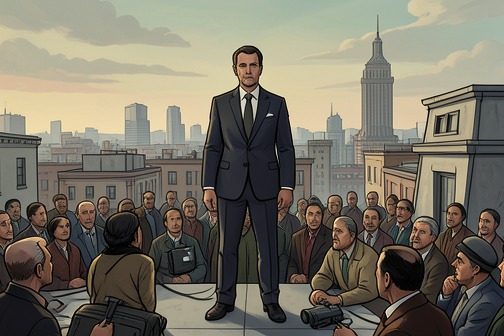
[Juzo Itami](entity:character-recall-character-juzo-itami-0aadd603670e)’s death is recounted as a contested event: although it was described as suicide, a later account alleges that [Goto-gumi](entity:organization-recall-organization-goto-gumi-bdfb5f910ec4) members forced him from a rooftop because of a film he planned to make. The narrative sets that accusation beside details that cast doubt on the suicide explanation, while leaving the evidence and the truth of the allegation unresolved.
## Background and Public Position
In the account of his final years, Itami had become a vocal supporter of the Japanese government’s new anti–organized crime laws. He was also described as a persistent irritant to organized crime and as a living symbol of the distance between the yakuza’s public pretensions and what they actually did. These details establish why his opposition mattered in the passage: he was not merely commenting on organized crime from a distance, but had become a recognizable public critic of it.
A few years after the laws were introduced, Itami allegedly died by jumping from a tall building. The passage initially gives this as the apparent account of his death, but its later conversation reopens the question of how to understand it. The sequence matters: his public opposition supplies a context for the later allegation, but the text does not present that context alone as proof of a connection between his activism and his death.
## Doubts About the Suicide Account
A speaker asks how Itami died, then refers to an article describing his reaction when a journalist approached him. According to the speaker’s recollection, Itami laughed and indicated that the journalist already knew what was going on. The speaker treats this reported behavior as difficult to reconcile with the idea that he was depressed and upset. It functions as a challenge to the suicide account, not as conclusive evidence about his state of mind or the circumstances of his death.
The same exchange questions the significance of a note associated with the death. It was written on a word processor, the speaker observes, so its authorship could not be established from the fact of its existence alone. That objection introduces a specific uncertainty into the account: the note is not treated as reliable proof of who wrote it. The passage does not identify its author, provide its contents, or establish that it was fabricated. It records the speaker’s reason for doubting what the note might otherwise seem to confirm.
## The Allegation Involving Goto-gumi
The later account offers a direct alternative to suicide. Itami, the speaker says, was planning another film, this one about Goto-gumi and its relationship with [Soka Gakkai](entity:organization-recall-organization-34f21c7ce9fe). The speaker claims that Goto was unhappy about the planned subject and alleges that five of his men took Itami to a rooftop and forced him to jump at gunpoint. In this telling, the death was made to appear as suicide rather than being a voluntary act.
The account thus proposes a motive and a chain of events: the planned film would scrutinize a relationship involving Goto-gumi; Goto allegedly objected; and five members of the group allegedly compelled Itami to jump. Each link belongs to the speaker’s accusation. The passage supplies no independent confirmation of the planned film’s details, Goto’s response, the identities of the five men, or the alleged coercion. Accordingly, the allegation should not be recast as an established finding, even though it radically changes the possible meaning of the death within the narrative.
## Narrative Significance and Limits
The episode turns on a contrast between an apparently settled explanation and a later challenge to its reliability. The reported laughter, the word-processed note, and the unmade film each become grounds for reconsidering the suicide account, but they carry different evidentiary weight: one is an anecdote about Itami’s demeanor, one raises a question of authorship, and one supplies the alleged motive for a killing. Taken together, they make the account suspicious without resolving it.
Itami’s public opposition to organized crime gives the allegation its broader stakes. In the passage, his death is not only a question of personal intention; it becomes a question of whether a public critic could be silenced because of the work he planned to undertake. Yet the text preserves a gap between suspicion and proof. It reports the ordinary account as an alleged suicide and then presents a speaker’s forceful counterclaim, leaving readers with competing explanations rather than a definitive resolution.
Event 23
Tadamasa Goto’s FBI Intelligence Deal and UCLA Liver Transplant
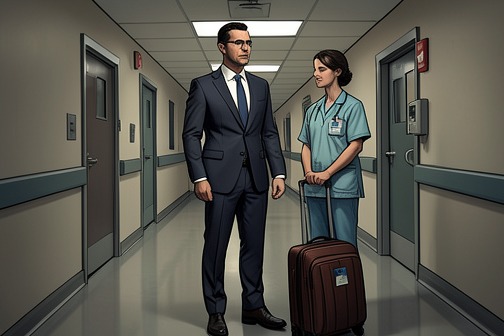
[Tadamasa Goto’s FBI Intelligence Deal and UCLA Liver Transplant](entity:event-recall-event-fbi-ucla-2b920dd3ebbc) was a 2001 exchange in which a powerful Japanese organized-crime figure offered intelligence in return for help entering the [United States](entity:location-recall-location-united-states-2f533bc8d0b9) for a liver transplant. Goto received the visa and the operation at [UCLA](entity:organization-recall-organization-4644be555b87); the FBI, according to the later reconstruction, received only a fraction of the information he had promised. The episode joined two systems with very different responsibilities: law enforcement seeking intelligence and a transplant system allocating scarce organs. What remained uncertain—what American authorities and medical staff knew, and where the treatment money came from—became central to the story’s public significance.
## The Approach and the Exchange
In January or February 2001, doctors at Showa University told Goto that without a liver transplant soon he would die. He had hepatitis C and a heart condition, and was considered a very unlikely transplant candidate in [Japan](entity:location-recall-location-japan-2b426de89e42). The urgency of his medical situation set the terms for what followed: Goto wanted access to treatment in the United States, where he had arranged a possible path to a transplant at UCLA.
In April, Goto approached the FBI through Hoshi Hitoshi, a former fixer for Nobusuke Kishi with influential political connections. Kishi relayed the offer. The FBI wanted information about senior yakuza figures because the [National Police Agency](entity:organization-recall-organization-f33ab0afb849) had refused to share such information, citing privacy issues. Without it, the FBI had difficulty monitoring yakuza activity in the United States.
Goto offered a comprehensive account of [Yamaguchi-gumi](entity:organization-recall-organization-yamaguchi-gumi-6dea21d63647) members, associated front companies and financial institutions, as well as information about North Korean activity. In exchange, he sought a United States visa so that he could undergo the transplant at UCLA. The visa did not itself provide medical treatment: the FBI helped open the door by pressing [U.S. Immigration and Customs Enforcement](entity:organization-recall-organization-eebbe4497982) to grant it, and UCLA carried out the operation. The account describes the practical bargain as access in return for intelligence, not an FBI role in choosing or providing a liver.
## Transplant and Unequal Outcomes
The operation took place on July 5, 2001. Goto supplied the FBI with only a fraction of the information he had promised. After receiving the transplant, he returned to Japan before the end of the year and did not speak to the FBI again. The arrangement therefore produced sharply different results for its participants: Goto obtained the medical access he needed, while the intelligence operation fell short of its intended return. The later account presents the deal as a major success for Goto and a limited one for the FBI.
The difference mattered beyond the two parties. Japan had a stringent transplant system and few donors; people in need of organs often left the country or died waiting. Goto’s treatment in the United States prompted the narrator to ask why Japanese criminals might receive transplants while law-abiding Americans did not. That question raised concerns about fairness, but it did not establish that the transplant itself had been improperly allocated. The account distinguishes the scarcity and ethical stakes from any claim that the operation violated medical rules.
The treatment of Goto and three other Japanese patients with yakuza ties brought separate questions about clinical duty and public accountability into view. UCLA and [Dr. Busuttil](entity:character-recall-character-dr-busuttil-a0f6d69be514) said that they did not make moral judgments about patients and treated them according to medical need. It had not been proven that either knew of the patients’ criminal affiliations at the time of the transplants. A review by the U.S. Centers for Medicare and Medicaid Services and UCLA found no evidence of improper conduct, according to the [Los Angeles Times](entity:organization-recall-organization-a9925259ee55). Yet the review did not settle what UCLA or its staff knew about the patients’ ties, or when they knew it. The account also leaves unresolved whether money paid for treatment came, in any instance, from criminal activity.
## Reconstructing the Deal
The transaction became a story years after the surgery. In November 2006, a [Goto-gumi](entity:organization-recall-organization-goto-gumi-bdfb5f910ec4) member whom Goto’s harsh internal discipline had alienated told [Jake Adelstein](entity:character-recall-character-jake-adelstein-a6696f64c12c) that the FBI had let Goto enter the United States. The source provided approximate dates and identified [Jim Moynihan](entity:character-recall-character-jim-moynihan-f1e88faff74a), the legal attaché at the U.S. Embassy in Japan, as the person who arranged it. Moynihan was also Adelstein’s friend and mentor, which made the disclosure personally difficult as well as professionally consequential.
Adelstein pursued corroboration rather than relying on the disclosure alone. A large body of data, conversations with a source in the U.S. Justice Department, and sources in Japanese police and underworld circles helped him assemble the chronology and the terms of the exchange. In December 2006, he asked Moynihan about making a deal with Goto. The later account presents the information as a reconstruction from multiple sources, while still marking some questions—particularly what UCLA knew—as unanswered.
## Publication, Risk, and Aftermath
Adelstein first developed the material for a book and tried to place the story in a Japanese weekly magazine, which rejected it. He later decided to write the account in English. His initial effort to publish through the Foreign Correspondents’ Club of Japan newspaper also failed: an editor’s accidentally forwarded memo described the claim as difficult to believe. These refusals did not disprove the reporting, but they delayed its public appearance and intensified the pressure surrounding it.
As the story became more dangerous to pursue, Adelstein was told that Goto had decided to have him killed if Goto were found guilty. On March 5, 2008, Adelstein was placed under police protection. The reporting thus carried consequences beyond the transplant controversy: revealing how Goto obtained entry to the United States also exposed the sensitive intelligence exchange behind it and placed the reporter at risk.
The account connects publication of the material to a later organizational consequence, but does not reduce that consequence to a simple, immediate cause. In October 2008, Goto was expelled from the Yamaguchi-gumi. Police told Adelstein that publication of [Heisei Japan Taboo Compendium 2008](entity:object-recall-object-2008-e0b3534791ee) had been the tipping point; Goto’s associates were also suspended, expelled, or banished, and the Goto-gumi split into two crime families. The transplant deal therefore came to signify more than a secret route to medical care. Its eventual exposure challenged the presumed boundary between criminal organizations, intelligence agencies, medical institutions, and the public’s right to scrutinize how scarce treatment and cross-border cooperation are obtained.
Event 24
Kazuoki Nozaki Murder
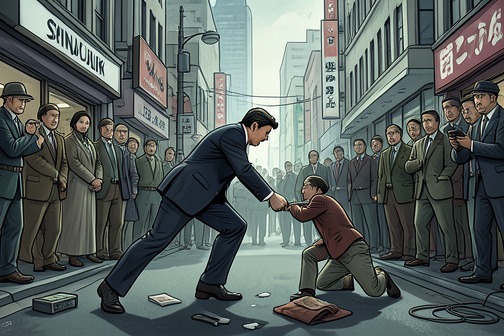
[Kazuoki Nozaki Murder](entity:event-recall-event-f5686312365a) was the killing of a fifty-eight-year-old building-management adviser and partial owner of the [Shinjuku](entity:location-recall-location-shinjuku-17bbde8f9594) Building, stabbed to death on a street in Minato Ward, [Tokyo](entity:location-recall-location-tokyo-0b4edfa3fe2f), in March 2005. In the account, the case connects a fatal attack to a later property investigation: police arrested [Tadamasa Goto](entity:character-recall-character-tadamasa-goto-792cac2e4db1) and eight others on suspicion of an illegal building-ownership transfer, while the narrator understood that they hoped to link Goto to Nozaki’s murder.
## Background and Killing
Nozaki was an adviser to a building-management company and held a partial interest in the twelve-story Shinjuku Building. The building was also partially owned by a front company associated with [Goto-gumi](entity:organization-recall-organization-goto-gumi-bdfb5f910ec4), placing Nozaki’s death within a dispute-laden property context. The account gives no further detail about the circumstances leading to the killing or Nozaki’s role in the building’s ownership beyond those facts.
In March 2005, Nozaki was stabbed to death on a street in Minato Ward. The narrator characterizes the killing as having been carried out with Goto-gumi efficiency: a small group, no witnesses, and little or no trace evidence. That description emphasizes how the attack could leave investigators with a victim and a suspected connection to a powerful organization, but few direct leads.
## The Property Investigation
More than a year after the killing, in May 2006, police arrested Goto, the president of a real-estate company, and eight other people on suspicion of illegally transferring ownership of a building in Shibuya Ward. According to police, Goto, who was CEO of the listed company Ryowa Life Create, and the other suspects had falsely registered the transfer of the Shinjuku Building. The suspected transfer concerned the same twelve-story property in which a Goto-gumi front company held a partial interest.
The stated arrest grounds were property-law violations, not a murder charge. The narrator nevertheless presents the property case as a route police chose because they wanted to pin Nozaki’s killing on Goto, adding that this was widely understood. The sequence therefore turns on a distinction between the offense used to make an arrest and the more serious crime investigators hoped to connect to Goto.
## Retrospective and Significance
The account recalls Nozaki’s murder during a later conversation about the danger facing the narrator. After hearing that Goto was gathering information about him and might seek to discredit or otherwise neutralize him, the narrator considered why he had not met Nozaki’s fate. Nozaki’s killing supplied a concrete precedent for that fear: the narrator imagined that, if he were targeted, he too might be killed in an alley and left without witnesses or useful forensic traces.
The murder thus functions both as a case in the property investigation and as a measure of the threat surrounding the narrator’s reporting. Its significance lies in the convergence of real-estate ownership, an alleged false registration, and a killing that police were said to be trying to connect to Goto. The account establishes that connection as the narrator’s understanding of the investigation; it does not report a finding that Goto was convicted of Nozaki’s murder.
Event 25
Acquittal in Tadamasa Goto’s Real Estate Registration Case

The acquittal of [Tadamasa Goto](entity:character-recall-character-tadamasa-goto-792cac2e4db1) in a real-estate registration case became more than a courtroom outcome: it brought [Jake Adelstein](entity:character-recall-character-jake-adelstein-a6696f64c12c) into the same small space as the powerful crime boss he had been warned might threaten him. The case had begun with a killing and an alleged property transfer, but its formal charges did not reach the murder police suspected Goto of involvement in. After the verdict, a detective’s warning about the people who had testified and an unexpected encounter at the elevators made the limits and dangers of the prosecution impossible to miss.
## The case behind the charges
In May 2006, Goto, president of a real-estate company, and eight others were arrested on suspicion of illegally transferring ownership of a building in Shibuya Ward. Police said Goto, the CEO of the listed company Ryowa Life Create, and the other suspects had falsely registered the transfer of the twelve-story [Shinjuku](entity:location-recall-location-shinjuku-17bbde8f9594) Building. The building was partly owned by a [Goto-gumi](entity:organization-recall-organization-goto-gumi-bdfb5f910ec4) front company. The arrest followed an investigation that had begun more than a year earlier.
The investigation’s more serious backdrop was the March 2005 killing of Kazuoki Nozaki, a fifty-eight-year-old adviser to a building-management company and partial owner of the Shinjuku Building. Nozaki was stabbed on a street in Minato Ward, [Tokyo](entity:location-recall-location-tokyo-0b4edfa3fe2f). As Adelstein understood it, police had arrested Goto for property-law violations because they wanted to pin him for Nozaki’s murder. The distinction mattered: the registration allegations provided the basis for the arrest, while the suspected connection to the killing supplied the case’s larger purpose. Adelstein reports that this purpose was widely understood, even though the murder itself was not the charge on which Goto had been arrested.
## The verdict and its warning
On March 7, Adelstein went to Goto’s trial at the [Tokyo District Court](entity:location-recall-location-tokyo-district-court-b54f2fdfef04), an act that angered the [National Police Agency](entity:organization-recall-organization-f33ab0afb849). He had been told that the main witness had suffered such intimidation that he refused to testify. Adelstein entered the courtroom and sat directly behind the witness. He later described the physical proximity in stark terms, but did not act on the violent possibilities he considered; instead, he briefly bumped the man with his hand to confirm that he was there. The witness did not appear to notice.
Adelstein left halfway through the proceedings, aware he was not supposed to be there, and waited in the hall. After the not-guilty verdict was announced to the press, one of the detectives working on the case warned him that everyone who had testified against Goto would vanish and then, one by one, be killed. The detective’s words were a prediction, not a reported account of what subsequently happened. Their force lay in the risk they attached to testimony: the courtroom could produce a verdict, but it could not guarantee the safety of those whose evidence had entered the case.
## The meeting outside the courtroom
Immediately after the announcement, Goto walked out of the courtroom toward the elevators with his bodyguard. He did not use a back exit or make a public display. The reporters present watched him, but none followed or tried to speak with him. When Goto’s lawyer, Yoshiyuki Maki, appeared in the hall, the reporters moved toward Maki and away from Goto. For a brief interval, Adelstein, Goto, and the bodyguard were the only people gathered in front of the elevators. It was the only time Adelstein met Goto face-to-face.
Adelstein says the encounter helped him understand Goto’s power. Goto was not physically imposing, but his direct look conveyed a sense of menace. The two men recognized one another. Goto mouthed something in Japanese; Adelstein took it as a threat, while acknowledging that he could not reliably read lips in any language. He answered without speaking, with a one-finger gesture. The exchange ended when the bodyguard gently pushed his angry employer into the elevator. There was no audible threat to report, only an uncertain message and a brief response in a nearly empty public hallway.
## Reporting under pressure
The scene followed warnings that Goto might be assessing what Adelstein knew and whom he had told. One proposed way to neutralize him was to discredit him rather than kill him; the adviser who discussed the danger argued that printing the story could reduce Goto’s incentive to silence its author. That advice made publication part of Adelstein’s response to the threat, not merely the eventual record of the case.
The acquittal did not establish that Goto had committed Nozaki’s murder, and the evidence here does not report a murder conviction. Instead, the episode leaves the reader with the gap between the case’s formal property-law allegations, police hopes of connecting Goto to a killing, and the intimidation surrounding testimony. The verdict closes the courtroom proceeding in one sense, but the detective’s warning and the silent encounter in the hall carry its danger beyond the court’s doors.
Event 26
2008 Disclosure of Tadamasa Goto’s FBI Deal
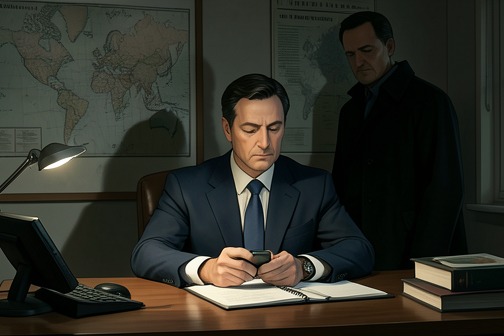
The [2008 Disclosure of Tadamasa Goto’s FBI Deal](entity:event-recall-event-2008-fbi-0f4d2c26a8cc) was a hard-won act of investigative publication: [Jake Adelstein](entity:character-recall-character-jake-adelstein-a6696f64c12c) reported that the FBI had helped a powerful yakuza leader enter the [United States](entity:location-recall-location-united-states-2f533bc8d0b9) for a liver transplant in exchange for information, then had to take the story beyond Japanese outlets unwilling to carry it. The disclosure’s significance lay not only in the reported arrangement, but in the path the account took through sources, editors, and competing newspapers before it reached the public. Its publication made Adelstein more visible—and, in his judgment, safer—while exposing how fear of legal, political, and commercial consequences could narrow what Japanese media would investigate.
## The allegation and its sources
The account began with a meeting in November 2006, far from [Tokyo](entity:location-recall-location-tokyo-0b4edfa3fe2f). An insider in Goto’s organization told Adelstein that Goto had been able to enter the United States because the FBI had let him in, and identified [Jim Moynihan](entity:character-recall-character-jim-moynihan-f1e88faff74a), the legal attaché at the U.S. Embassy in [Japan](entity:location-recall-location-japan-2b426de89e42), as the person who arranged it. The allegation was startling enough that Adelstein did not treat the first disclosure as a finished story. He later assembled records and consulted sources in the U.S. Justice Department, Japanese police, and the underworld, using them to test and connect what he had been told.
The medical urgency supplied essential context. In early 2001, doctors at Showa University had reportedly warned Goto that he would die without a liver transplant. He had hepatitis C and a heart condition, and was considered an unlikely transplant candidate in Japan. Adelstein’s account traced Goto’s approach to the FBI in April 2001 through Hoshi Hitoshi, a former political fixer with deep connections to the Liberal Democratic Party. In the article that followed, the alleged arrangement linked Goto’s need to travel for treatment with FBI assistance and the provision of information.
The reporting was supported by a large cache of data that included flight records and dates associated with Goto’s [UCLA](entity:organization-recall-organization-4644be555b87) surgery. Adelstein says that, after consulting several kinds of sources, he was able to put the information together. The evidence did not arrive as a single official explanation: the story took shape through a combination of an insider’s account, documentary material, and cross-checking with people positioned in different institutions. Protecting the organization source remained important even after police asked Adelstein to identify him.
## Rejection and independent verification
The first obstacle was not a lack of material but the unwillingness of potential publishers to assume the risks of printing it. Several outlets rejected the story as too old, doubted that the [National Police Agency](entity:organization-recall-organization-f33ab0afb849) would welcome it, or anticipated difficulty getting the FBI to confirm it. One interested newspaper wanted to use the story chiefly to attack the FBI, an approach Adelstein declined. A publishing-house editor was more direct: publication could invite lawsuits and costly security measures, expose staff and offices to retaliation, and threaten the company’s printing business with [Soka Gakkai](entity:organization-recall-organization-34f21c7ce9fe).
A magazine said it might publish if Adelstein obtained more hard evidence. He traveled to the U.S. West Coast to meet an art dealer described as a [Goto-gumi](entity:organization-recall-organization-goto-gumi-bdfb5f910ec4) money launderer, but the meeting failed to produce what the magazine required. The accumulating rejections and the unsuccessful trip left him in a severe personal crisis. He eventually chose a different route: rather than keep trying to sell the story first in Japanese, he would write it in English. That decision changed the publication strategy, not the evidentiary burden.
The Foreign Correspondents’ Club of Japan also initially seemed like a possible outlet, but an editor mistakenly sent Adelstein a skeptical internal memo. A family friend then introduced him to John Pomfret, editor of [The Washington Post](entity:organization-recall-organization-4d0dcabc362c)’s Outlook section. Pomfret asked for proof; Adelstein supplied about a hundred pages. For more than a month, Pomfret questioned him, checked facts, and examined the sourcing. The decisive step came when The Washington Post independently obtained confirmation from the FBI that Adelstein’s account was true. On May 11, the paper published the story. The Foreign Correspondents’ Club of Japan later published Adelstein’s article too, but omitted Goto’s name.
## A second publication and a reluctant response
Before the Washington Post article appeared, Adelstein sent it to the [Yomiuri Shinbun](entity:organization-recall-organization-3c2abdf2982d). It ignored the story, as did the other Japanese newspapers he approached. He had already begun working with the [Los Angeles Times](entity:organization-recall-organization-a9925259ee55), whose reporters were interested in the account and whose forthcoming coverage addressed Goto’s UCLA treatment, which the Washington Post article had not mentioned. On May 31, the Los Angeles Times made the story its front-page report. Japanese media could no longer avoid mentioning it altogether, although many reports attributed the information to the Los Angeles Times rather than undertaking independent verification or further investigation.
That pattern had a wider institutional context in Adelstein’s account of Japanese reporting. At the [Tokyo Metropolitan Police Department](entity:organization-recall-organization-5932fff45c51), the official press-club floor served newspapers, television, and radio and local newspapers, while weekly and monthly magazines were excluded and foreign media had no representatives. Adelstein described the mainstream outlets’ position as a media monopoly whose members had little incentive to break it up. The disclosure does not establish that this structure alone caused the newspapers’ silence, but the contrast is telling: a story that Japanese outlets had declined to publish gained public traction through foreign newspapers, then returned to Japanese coverage partly under their bylines.
## Risk, visibility, and aftermath
The story’s publication unfolded against a direct threat. Adelstein had been told that Goto would have him killed if Goto were found guilty, a prospect made more consequential by his medical condition. On March 5, 2008, Adelstein was placed under police protection. An FBI special agent accompanied him to the National Police Agency, and U.S. authorities arranged for local law enforcement to watch his home in [America](entity:location-recall-location-5d55e9152db1). At a meeting with Japanese officials, Adelstein refused to disclose his source, despite being warned that this could make round-the-clock protection harder to justify.
The disclosure did not, in Adelstein’s account, visibly change Goto’s position at once. It did change the reporter’s own sense of exposure. Once the story was public, he believed that being a conspicuous target made it less likely that he would be killed or that people close to him would be harmed. He also concluded that a fuller challenge to Goto required detailed reporting in Japanese. That later effort became part of a separate publication history: police told Adelstein that the publication of [Heisei Japan Taboo Compendium 2008](entity:object-recall-object-2008-e0b3534791ee) was the tipping point before Goto’s expulsion from the [Yamaguchi-gumi](entity:organization-recall-organization-yamaguchi-gumi-6dea21d63647) around October 14, 2008. The account distinguishes that later organizational consequence from the earlier English-language disclosure. The report opened the story to public scrutiny; its eventual political and criminal-world consequences depended on further publication and developments beyond the article itself.
Event 27
Tadamasa Goto’s Expulsion from the Yamaguchi-gumi
Around October 14, [Tadamasa Goto](entity:character-recall-character-tadamasa-goto-792cac2e4db1) was officially expelled from the [Yamaguchi-gumi](entity:organization-recall-organization-yamaguchi-gumi-6dea21d63647), a reversal that left one of [Japan](entity:location-recall-location-japan-2b426de89e42)’s most influential yakuza figures an ex–crime boss. The book’s publication had brought threats and professional fallout; according to police, it had also become the tipping point for Goto’s removal and a rupture within his organization.
## Publication and Pressure
The expulsion followed the publication of *[Heisei Japan Taboo Compendium 2008](entity:object-recall-object-2008-e0b3534791ee)*. The reaction to the anthology was fierce: [Tomohiko Suzuki](entity:character-recall-character-tomohiko-suzuki-e9612da6cab5) fielded the phone calls and threats, while the book received scattered notice. A yakuza fan magazine accused [Jake Adelstein](entity:character-recall-character-jake-adelstein-a6696f64c12c) of being a CIA agent, a CIA pawn possibly connected to an international Jewish conspiracy, or an ignorant American seeking publicity. The competing accusations cast the book as both a threat and an affront to the magazine’s favorable view of the yakuza.
[Kodansha International](entity:organization-recall-organization-kodansha-interna-d54dbb02b65e) withdrew the book after commissioning an outside risk assessment whose conclusion was unfavorable. The withdrawal was another consequence of the danger surrounding the publication, even as the book’s appearance continued to have consequences inside the yakuza world.
## Expulsion and Organizational Rupture
Goto’s expulsion was made official around October 14. The public explanation, as Adelstein recounts it, presented the country’s wealthiest and most influential yakuza as having been cast out for partying and playing hooky. Police gave Adelstein a different account: they said the publication of the anthology had been the tipping point. The distinction matters to the event’s meaning. The publicly circulated explanation reduced the upheaval to personal misconduct; the police account connected it to the exposure produced by the book.
Goto was not the only person punished. A number of his associates were suspended, expelled, or banished for life, and the [Goto-gumi](entity:organization-recall-organization-goto-gumi-bdfb5f910ec4) split into two crime families. With the organizational break, Goto was no longer a crime boss but an ex–crime boss. Police warned Adelstein to lie low for a while, a caution that underscored the danger surrounding the consequences of the expulsion.
## Reception and Immediate Aftermath
For Adelstein, the news brought an abrupt change in status and mood. He received congratulatory calls from police officers, friends, other reporters, and sources. On October 15, a caller who identified himself as a very high-ranking member of the Yamaguchi-gumi thanked Adelstein for bringing the matter to the organization’s attention and said it had been resolved satisfactorily. The call placed the book’s consequences in a striking new light: the reporting had not only provoked threats and a publisher’s withdrawal, but had also drawn acknowledgment from within the organization whose affairs it exposed.
## Significance
The expulsion is presented as both a personal reversal for Goto and an institutional rupture: associates were disciplined, the Goto-gumi divided, and its leader lost his standing as a boss. The narrative keeps the stated public explanation beside the police account that the anthology was decisive, without treating the two as interchangeable. That contrast makes the book’s impact legible not as a simple victory for its author, but as a publication whose effects spread through the criminal organization and carried real risks for everyone connected to it.
Event 28
Helena’s Disappearance and Suspected Murder
[Helena’s Disappearance and Suspected Murder](entity:event-recall-event-c64eb4f519fe) turns on a devastating disclosure that never becomes certainty: a man told [Jake Adelstein](entity:character-recall-character-jake-adelstein-a6696f64c12c) that [Helena](entity:character-recall-character-helena-122119b0baeb) had been seized and killed after investigating the [International Entertainment Association](entity:organization-recall-organization-international-en-1e9852b64836), then produced photographs he claimed showed her. The account implicates the [Goto-gumi](entity:organization-recall-organization-goto-gumi-bdfb5f910ec4) and places Jake’s request at the center of the danger, but the photographs do not establish the woman’s identity. Helena’s disappearance remains unresolved, leaving accusation, evidence, and hope in uneasy coexistence.
## The Investigation and Its Risks
Jake was pursuing information about exploitation in [Tokyo](entity:location-recall-location-tokyo-0b4edfa3fe2f)’s nightlife, a world where foreign workers could be wary of both police and journalists. In an earlier investigation, he had concluded that entering Roppongi’s hostess-club scene required concealment rather than announcing himself as a reporter. He adopted a false name and presented himself as an insurance investigator, using a fabricated business card and a second phone while looking for people who might know about a missing woman and the customer who had taken her to the seaside. This background shows the risks and improvisations surrounding his reporting, though it does not itself establish Helena’s role in that earlier search.
Helena’s connection to the later danger emerged through a separate assignment. Jake had asked her to look into the International Entertainment Association. When he later described her and the task to another man, the man reacted at the mention of the Goto-gumi and the name of an NGO. The precise significance of that reaction was not explained at the time. In a subsequent account, however, the man connected Helena’s investigation to her discovery by people associated with the organization. Her work was meant to gather information; instead, the account made it appear that her investigative trail had exposed her to retaliation.
## The Allegation of Her Capture
The man told Jake that Helena had been caught investigating the International Entertainment Association and taken to one of its offices in [Ebisu](entity:location-recall-location-ebisu-5be9811c9639). He said she had Jake’s business card with her and had refused to talk, supposedly to protect him. The allegation therefore recast the card as more than a practical link between colleagues: in the man’s version, it was evidence of Jake’s connection to her and a reason Helena faced pressure to disclose what she knew.
He claimed that she had been held and abused before dying. The account was delivered as information, not as a verified police finding, and the narrative provides no independent confirmation of where or when Helena died. The man also blamed Jake for sending her to investigate, asserting that the Goto-gumi had considered Jake a possible undercover police officer. His explanation thus served two purposes: it offered a purported account of Helena’s fate and assigned responsibility for it to Jake. The circumstances came to him through a hostile speaker whose knowledge and motives were not independently established.
## Photographs and the Limits of Proof
The man presented the photographs as confirmation and described them as a warning intended for women working in clubs. Jake saw an image of a woman with long chestnut-brown hair resembling Helena’s. But he could not identify her with confidence: the eyes did not look like Helena’s to him, and he could not check for the mole above her upper lip. The photographs were taken back before he could examine them for long. Their claimed evidentiary force was therefore inseparable from their uncertainty: they intensified the suspicion that Helena had been killed without resolving whether the pictured woman was her.
That distinction governs the event’s significance. The man spoke as though the photographs settled the question, but Jake’s account preserves the gap between a claim of proof and proof itself. There is no confirmed body, no independently verified identification, and no reliable resolution in the evidence presented. The photographs function instead as intimidation and as a possible fragment of evidence, leaving Jake to confront both what they might mean and what they cannot establish.
## An Unresolved Absence
Jake remembers Helena as someone who had wanted a new life, had money in the bank, and had bought a home. He recalls her as beautiful, caring, brave, and funny. These details do not disprove the allegation; they give the missing person a life beyond the reported violence and beyond her usefulness to an investigation. Her friends remain part of the story too: Jake keeps in touch with some of them and continues sending New Year’s greetings to Helena’s old email address, but the messages return undeliverable.
The account ends without confirmation. Jake thinks he is fairly sure Helena is no longer alive, yet part of him continues to imagine that she left, cut her ties, and began again somewhere beyond his reach. In Tokyo he sometimes thinks he sees or hears her, only to recognize that it is not her; he dreams about her and says he has slept poorly since March 2006. The repeated return of her possible fate—through the man’s story, the photographs, failed messages, and dreams—makes uncertainty itself the lasting consequence. Her disappearance is not resolved into a proven murder, and Jake’s hope that she might still reply remains alongside his fear that the account was true.